Monday, June 20, 2022: First day of PCC.
The nerves are on edge. Will everything work out?
The first bad news have already arrived: one of the international participants has to go into Corona quarantine and a speaker for the afternoon is also cancelled because of a Corona illness.
Already in the run-up to the PKK it was clear that the announced participants from the Central African Republic would not receive their visas in time, as well as two bishops from South Africa, the bishop from Botswana and three bishops from India. And the participant of the youth delegation from South Africa also did not get a visa. This is due to the flood of visa applications after the lockdown periods and the lack of increased staffing in the relevant authorities.
All the more we are happy about the participants who got a visa and arrived: representatives from 10 countries. High-ranking representatives of partner churches from Brazil, Ethiopia, Malawi, South Africa, India, Peru, Russia, Alsace and Germany are represented, as well as a guest from the Lutheran World Federation, who represents many countries and comes from Nigeria. So, despite Corona and visa problems, we are still very international at the PKK.
Officially, the PKK starts on Monday afternoon with a joint Meet&Greet. Unofficially, it starts for the participants who are already there and have coped well with the jetlag, with a walk on the Friedensort2GO-Weg. This path shows at six stations how people who set out can take small steps toward peace and how this is implemented in the projects of the partner churches that ELM accompanies. "It's like the coffee to go (2go) that you can take as you walk by," says Hannah Rose, Poverty and Peace Work International Officer at ELM "none of us will be able to stop the war in Ukraine, but we can express our hopes and fears, show our solidarity."
Bishop Joseph Bvumbwe on war and dialogue
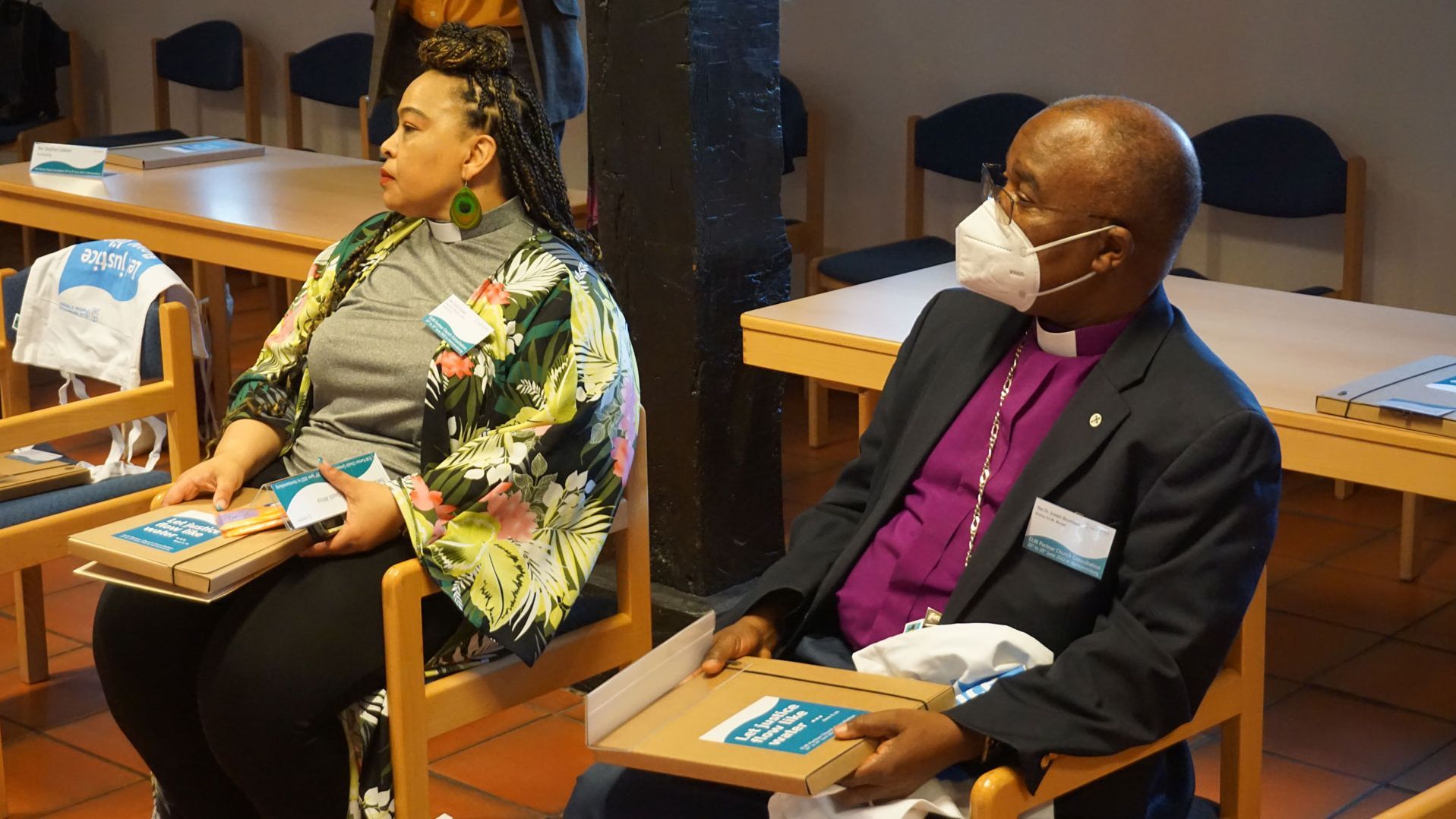
As part of the Partner Churches Consultation, we spoke with Rev Dr. Joseph Bvumbwe, Bishop of the ELCM (Malawi), about peace and justice.
War in Ukraine: "The answer is dialogue".
Rev Dr. Joseph Bvumbwe is bishop of the Evangelical Lutheran Church of Malawi. At the partner church consultation of the Ev.-luth. Missionswerk in Hermannsburg, he speaks about the connection between war and hunger and the answer of his church to it. It is: dialogue.
The people of Malawi are also indirectly affected by the war in Ukraine. The country, where 90 percent of the population is employed in the agricultural sector, obtains fertilizer from Ukraine. "As long as there is war in Ukraine, imports stagnate," says Bvumbwe. Compounding the farmers' problem is climate change. The rainy seasons have changed. It is becoming increasingly difficult to plan the right time for seeds to go into the ground. Then, when there is not only a lack of rain, but also a lack of fertilizer, there is little or no harvest and people go hungry. "And hunger can be just as bad as war," Bishop Bvumbwe says.
Does he have any idea what solutions there are to conflicts and wars like the one in Ukraine? "I agree with the opinion of our founding presidentHastings Kamuzu Banda. Wherever there are conflicts between groups or nations, he advocates dialogue. You can't lose anything by seeking dialogue, but you can potentially save lives. Coming together at a round table, discussing the different points of view, listening to each other, being patient and tolerant, that's the only way."
"War is a disaster and like a play that goes on once it has started. It simply must not take place," Bvumbwe is convinced. When it is all over, he said, many orphans, refugees and destruction will have been created. Even now, he thinks of families being torn apart because fathers are at war, having to fight and possibly being killed, as well as mothers and children fleeing. "We have seen in the past what wars have done. I think the best thing we can do is learn from the past and work to live without wars in the future."
Impressions of the Partner Church Consultation 2022
Church leaders from international partner churches of the ELM go on pilgrimage on the Peace2GO Way in Hermannsburg.

A group picture of the participants of the Partner Church Consultation 2018 in Brazil. To be continued - now in Hermannsburg:

The start of PCC 2022 was marked by a guided tour on the Friedensort2GO-Weg, a multimedia pilgrimage trail in Hermannsburg, which was designed by ELM.

The Poverty and Peace Work International Officer at ELM guided the participants.

The first stop for the participants was the Wailing Wall. It is a work of art made of steel and wood. People can put notes with their prayers or other requests into the wall.

This short break at the traffic lights offered the opportunity for a nice photo. By the way, the intersection is feared among ELM employees because of the complexity.

The pilgrimage together also offered the opportunity for an exchange. Here the ELM fundraiser talks with Rev Dr. Joseph Bvumbwe, bishop from Malawi ...

... and Public Relations leadership asked IECLB Vice President Rev Odair Braun about his expectations for the PCC. Now we're really getting into it. We are excited.
The dream of a just church of the future
Gender justice, climate justice, justice and peace, and just structures in church governance - the number of topics at this year's ELM Partner Church Consultation (PCC) are as diverse as they are challenging.
In the afternoon, participants found themselves in front of a special experimental arrangement to engage in conversation around the theme of "The Dream of a Just Church of the Future."
Gender justice, climate justice, justice and peace, and just structures in the governance of a church - the number of topics at this year's ELM Partner Church Consultation (PCC) are as diverse as they are challenging. And all of these four areas can hardly be separated from each other. It is about the church of the future, in which as many of its parts as possible should participate on an equal footing. It is about the relevance of the church in the face of questions about its own future and, as it were, about its contribution to the preservation of creation and a peaceful coexistence of people.
Big issues with many aspects in detail to consider. Four groups composed of delegates from the partner churches and the ELM, who are to deal with each of these topics once every quarter of an hour - that is the experimental set-up for the welcome evening of the PKK in the farmhouse of the Evangelisches Bildungszentrum Hermannsburg (EBH). It brings the participants into conversation, introduces them thematically to what the next four days will be about.
The key questions are discussed, sometimes passionately: In which way, with which projects would I like to see the respective justice goals implemented by 2030? What specific steps must be taken to achieve this? What do I have to do in my role as a leader to achieve these goals? A lively exchange of experiences begins about the state of one's own church, the deficits, but also the first steps towards change. It is about clarifying roles between the sexes, balancing women and men in church committees and about gender diversity, but also the fact that this does not yet mean equal participation in decision-making processes. It is about concrete implementation steps within one's own church to react to climate change - be it in the purchase of sustainable products or the renunciation of climate-damaging products, be it to become a contact point oneself, to support people in their efforts to act responsibly. Also, when it comes to working for a just peace, standing up for diversity and against totalitarian tendencies.
Meet and greet
If this image gallery does not work for you, please use the link in the side column. The function depends on the browser you are using.
Well, I wonder what it will be?
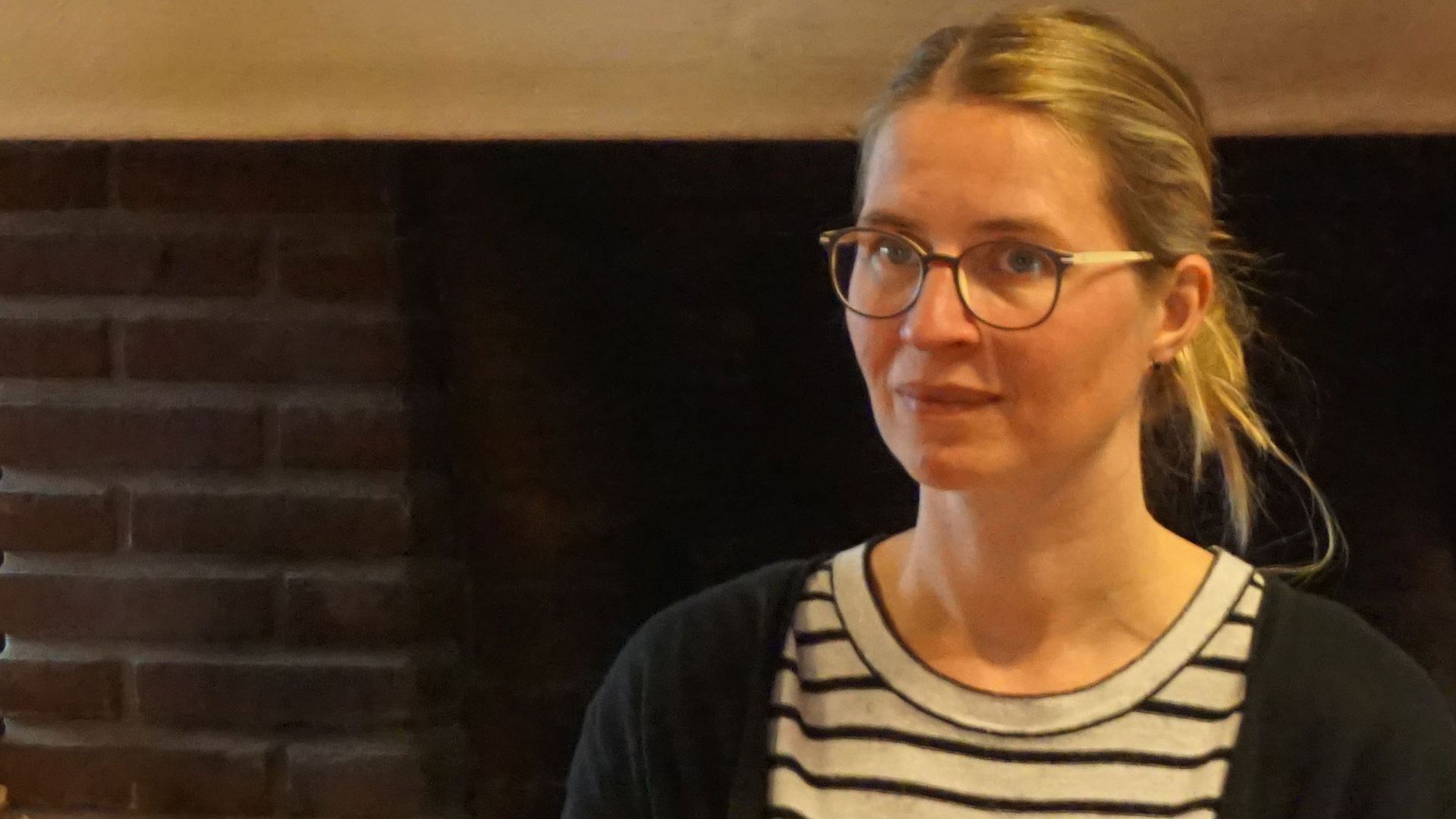
Tense anticipation here as well, especially since Marlene Altebockwinkel is still very new to ELM.
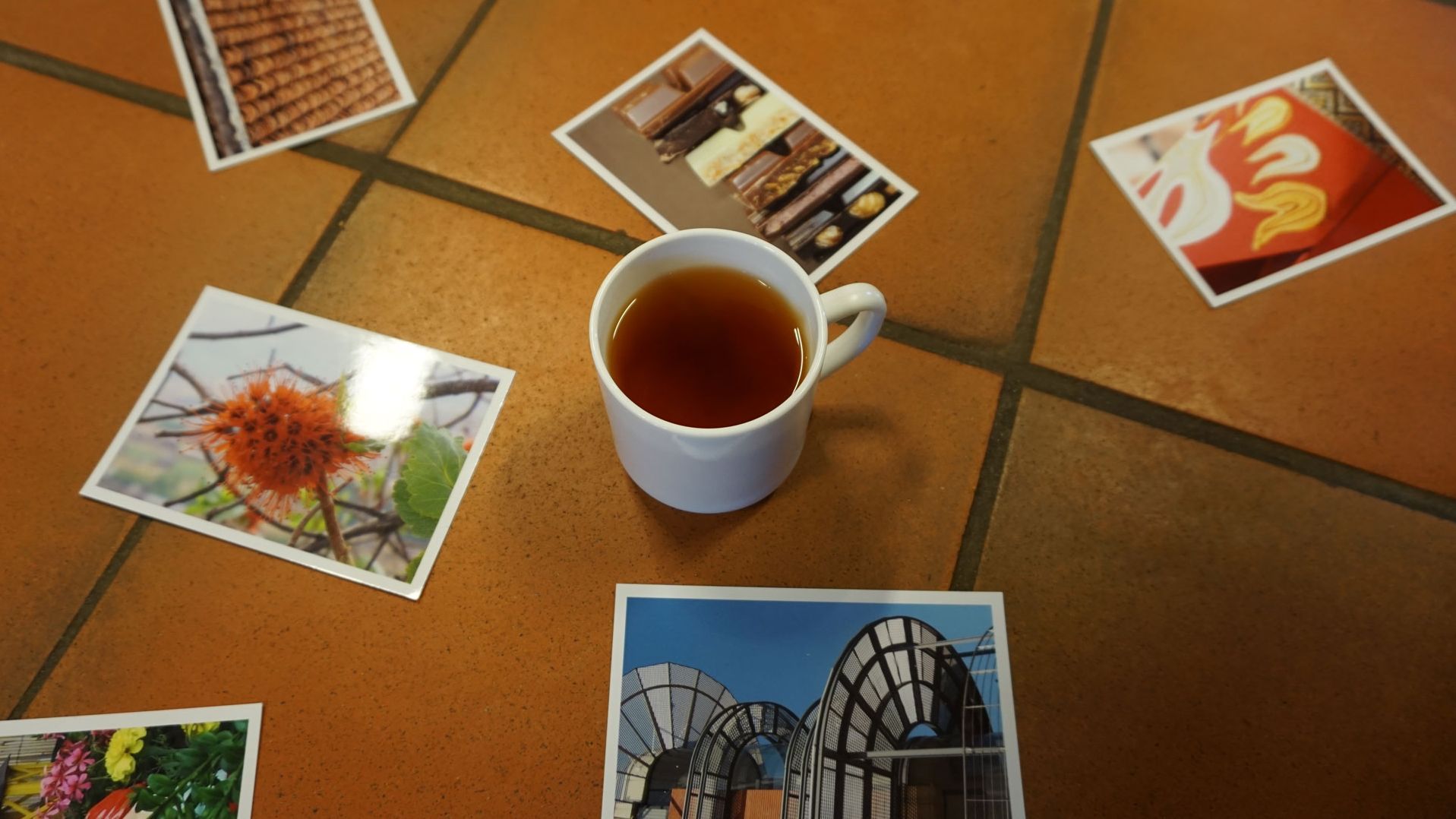
About the postcards you easily get into conversation

Which postcard suits me? Liliana Kasper seems satisfied with her choice ...
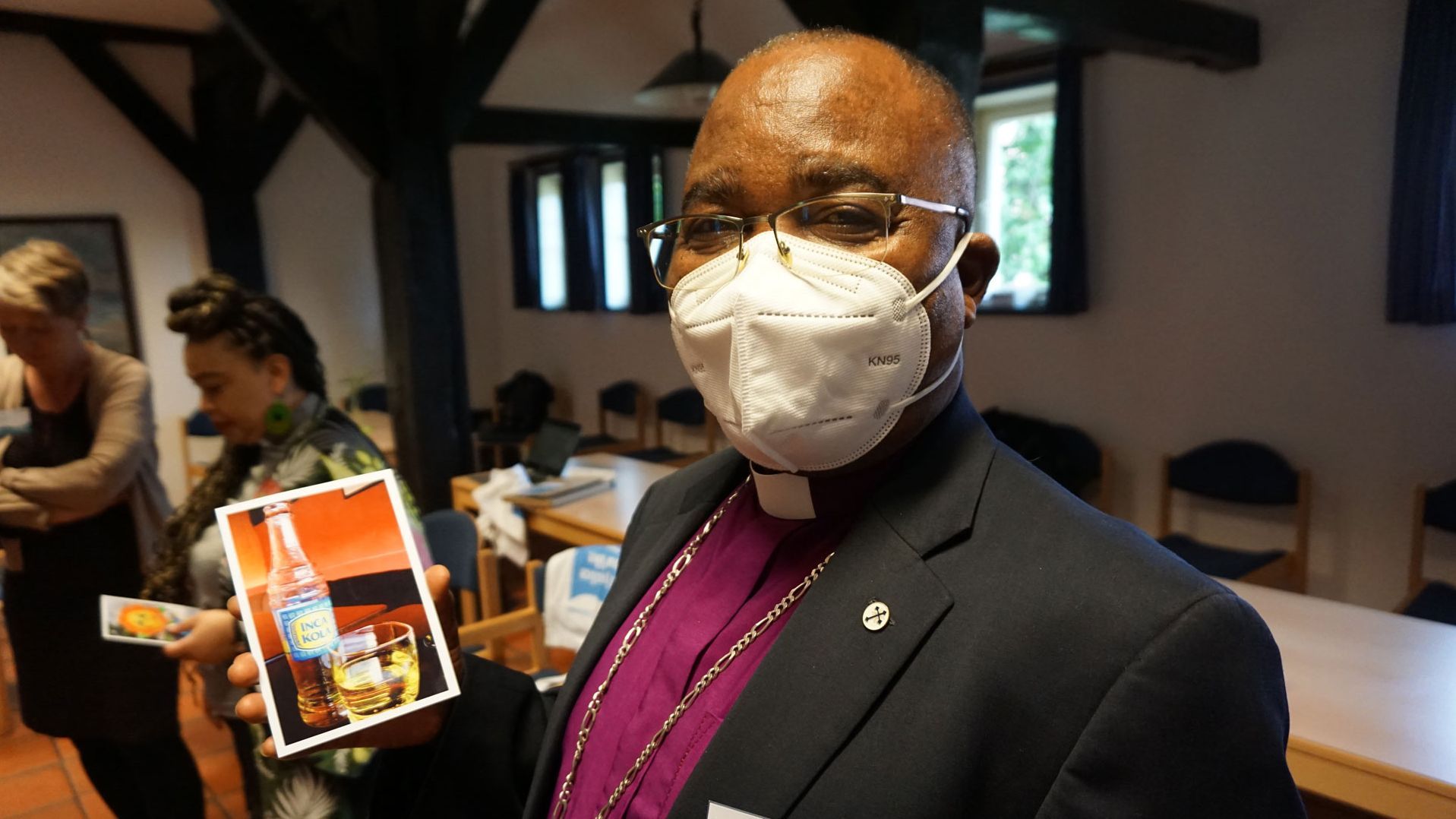
... and also Bishop Bvumbwe likes his postcard
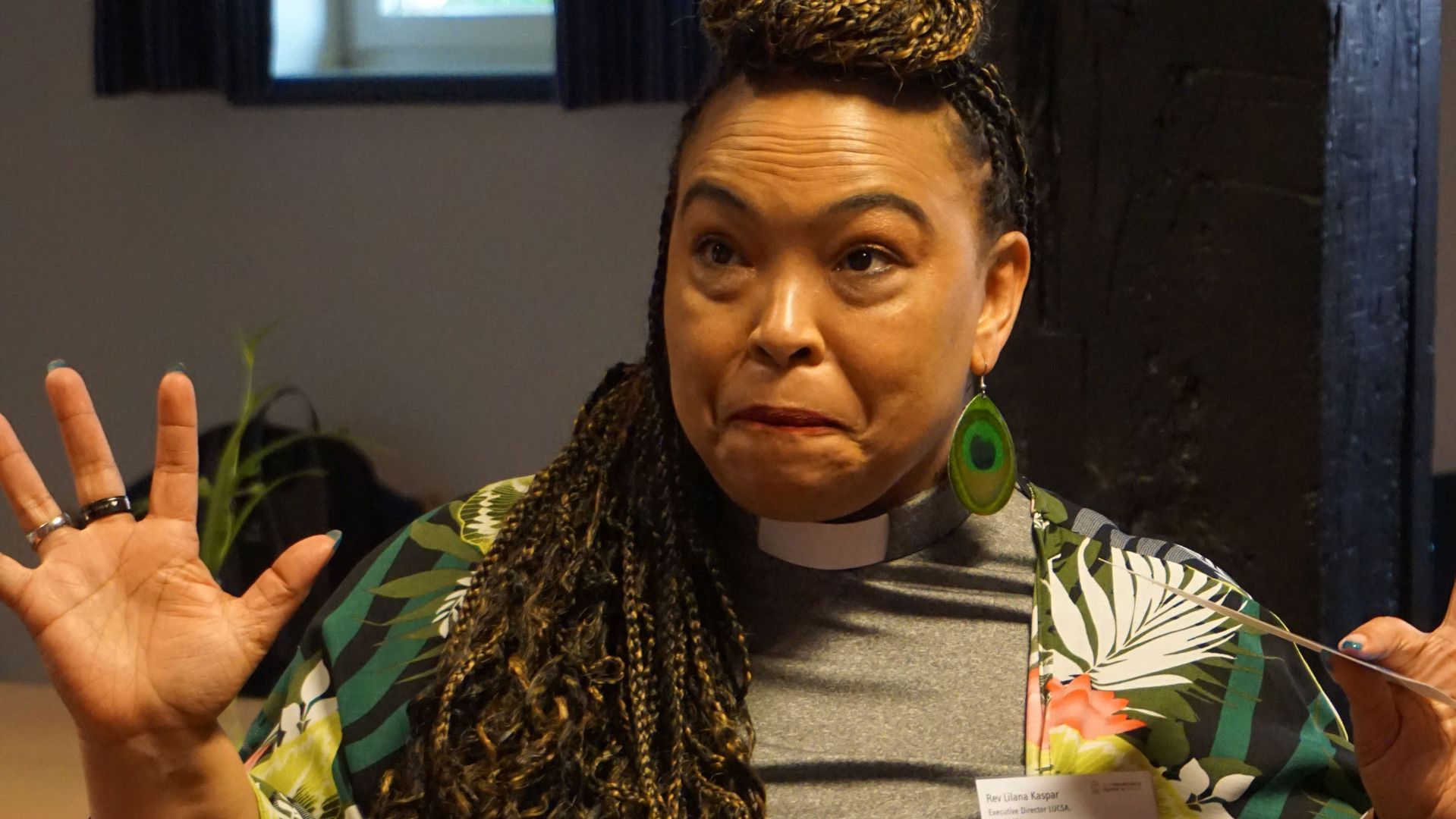
... even if some things may need a little explanation.
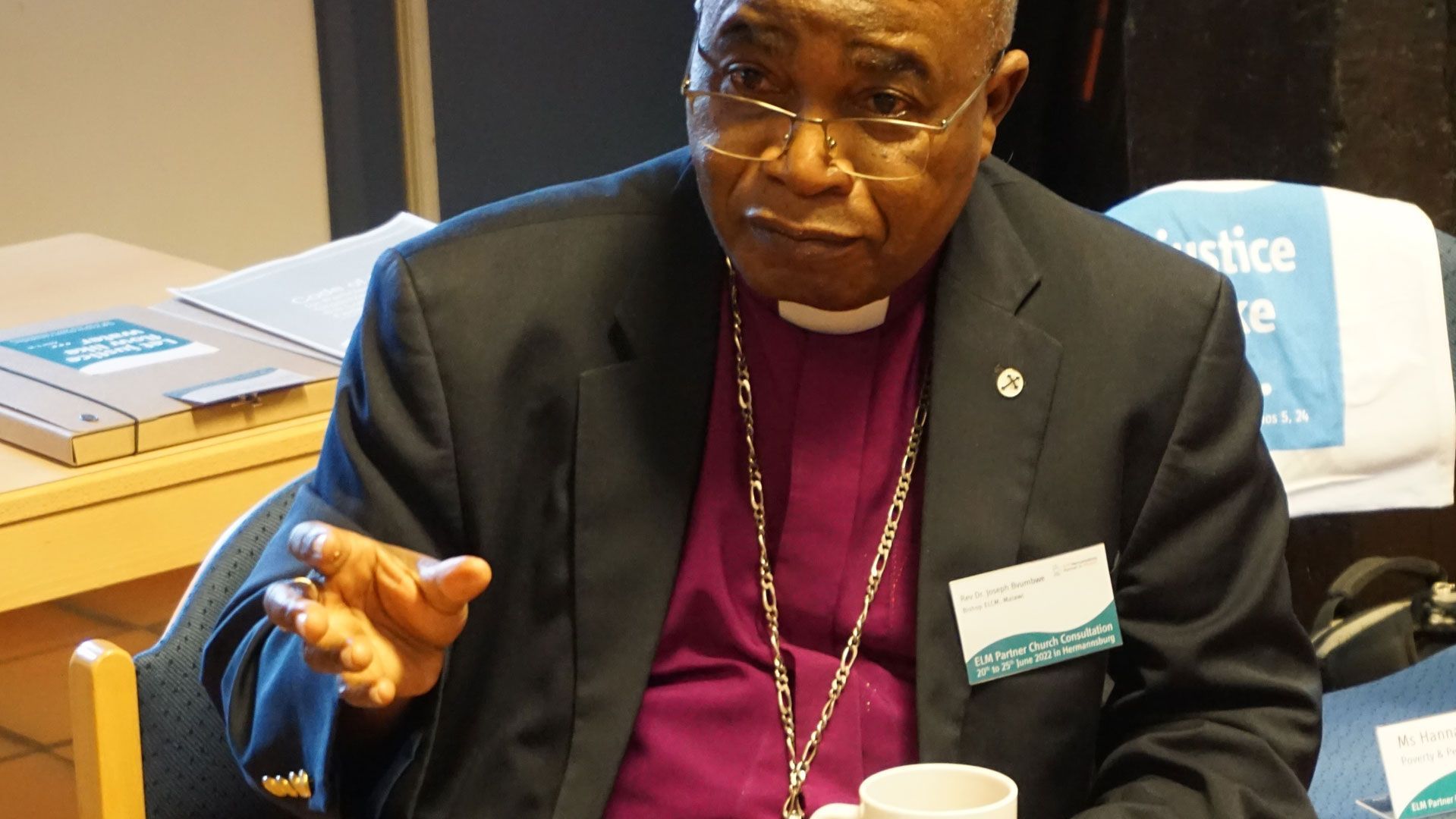
At least the interest is awakened.
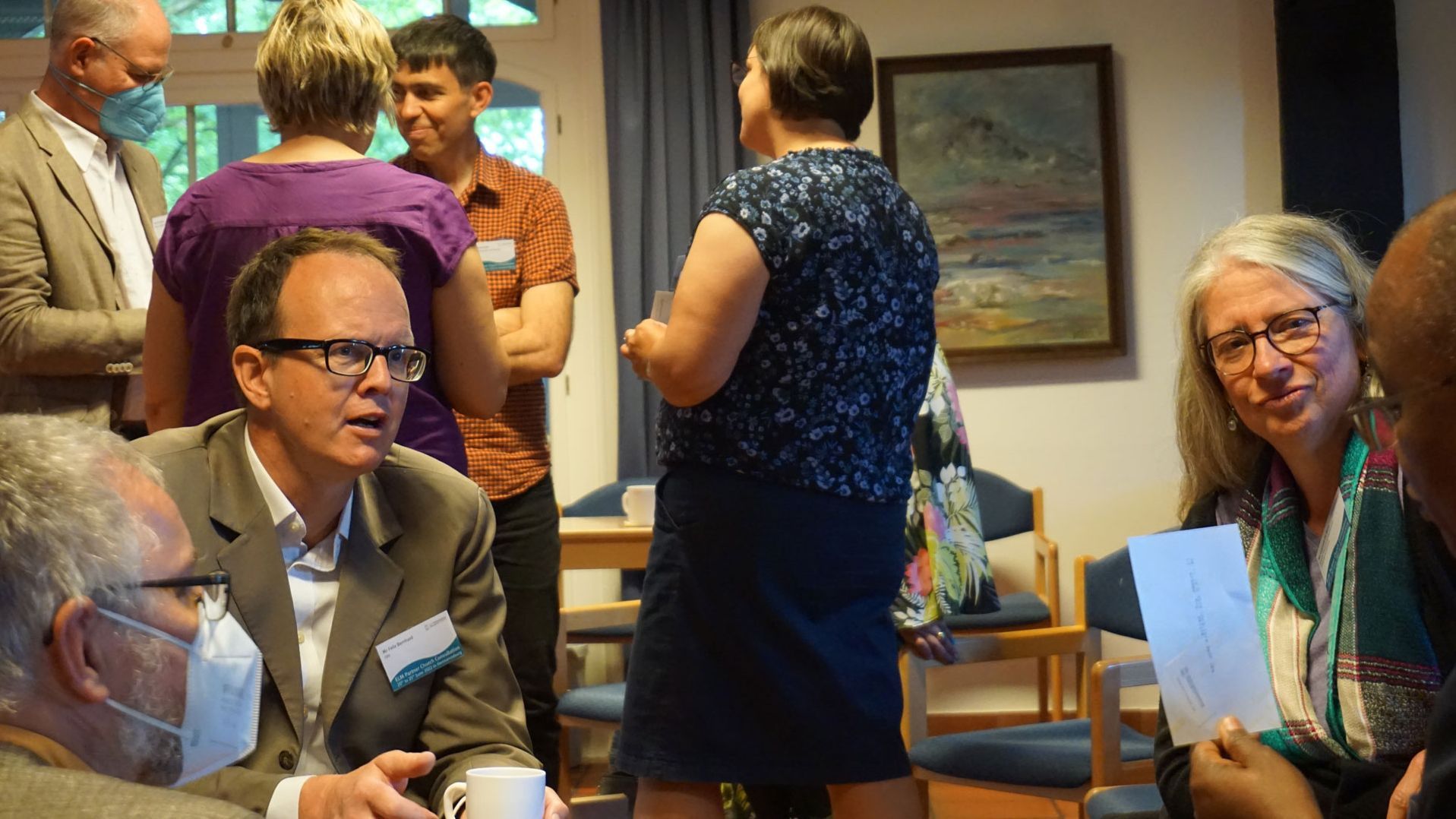
Everywhere, conversations are in full swing.
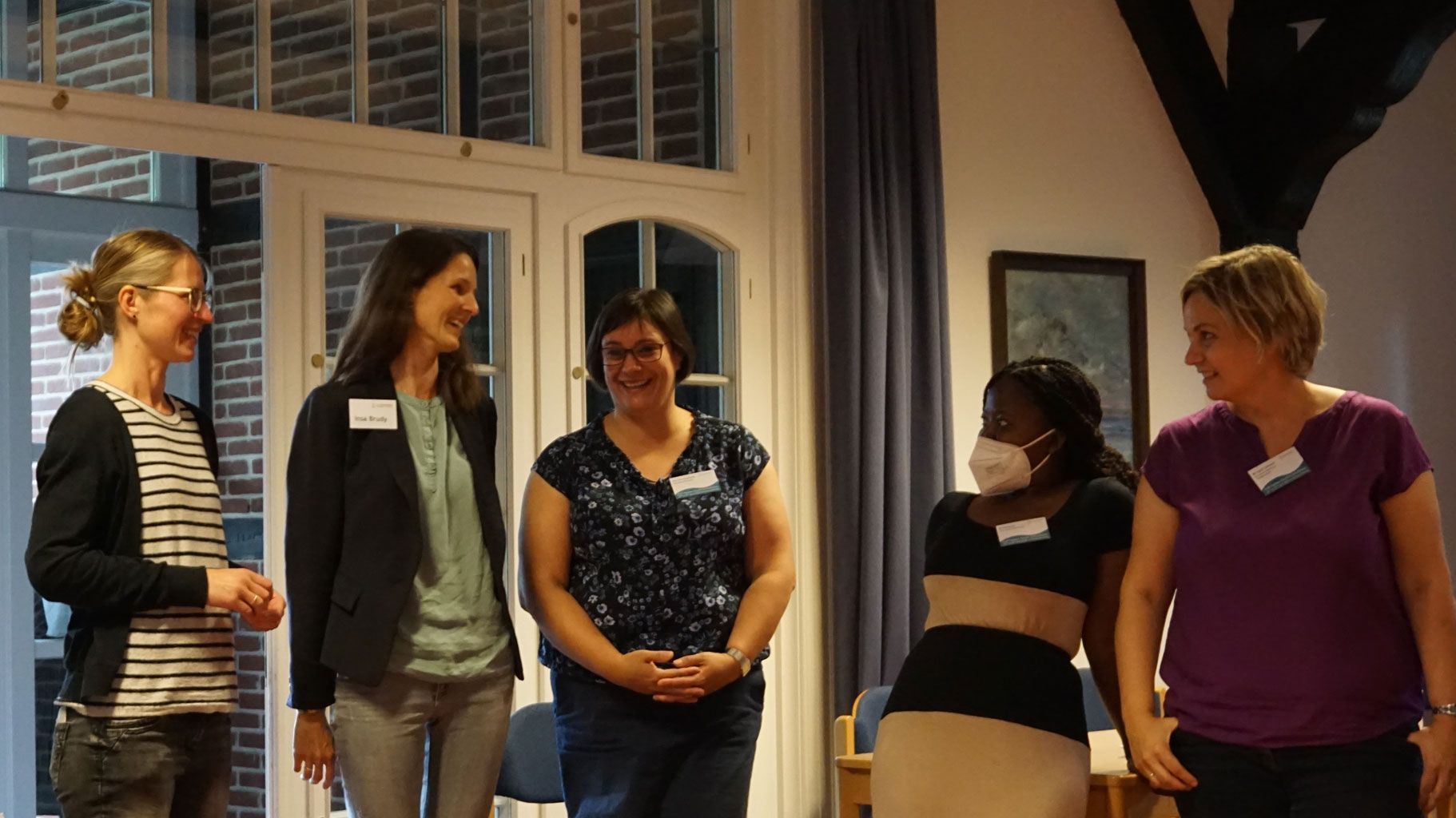
And there's no shortage of laughter either.
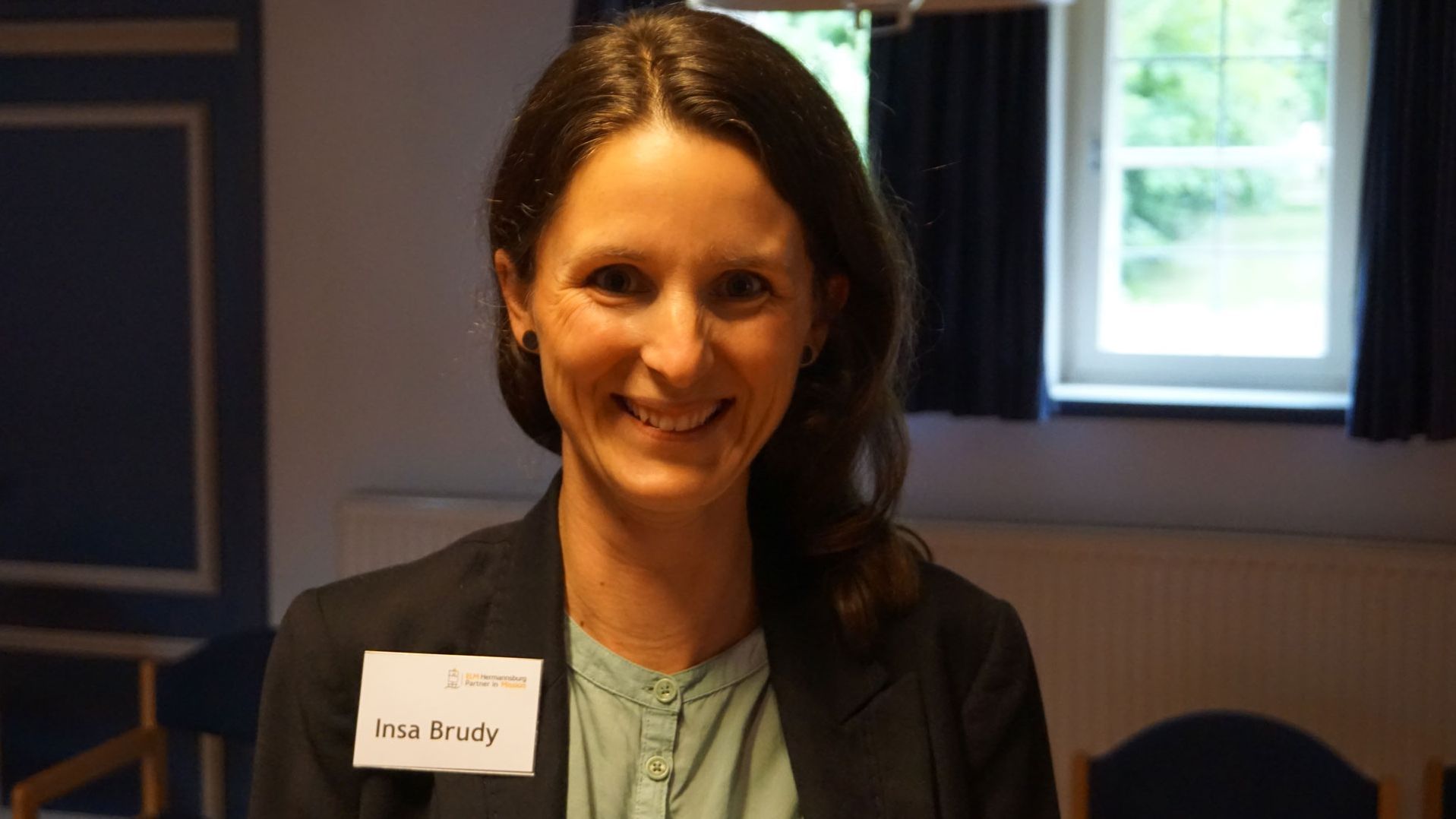
Insa Brudy, youth advisor of the ELM, who moderates the afternoon, is also happy about this.
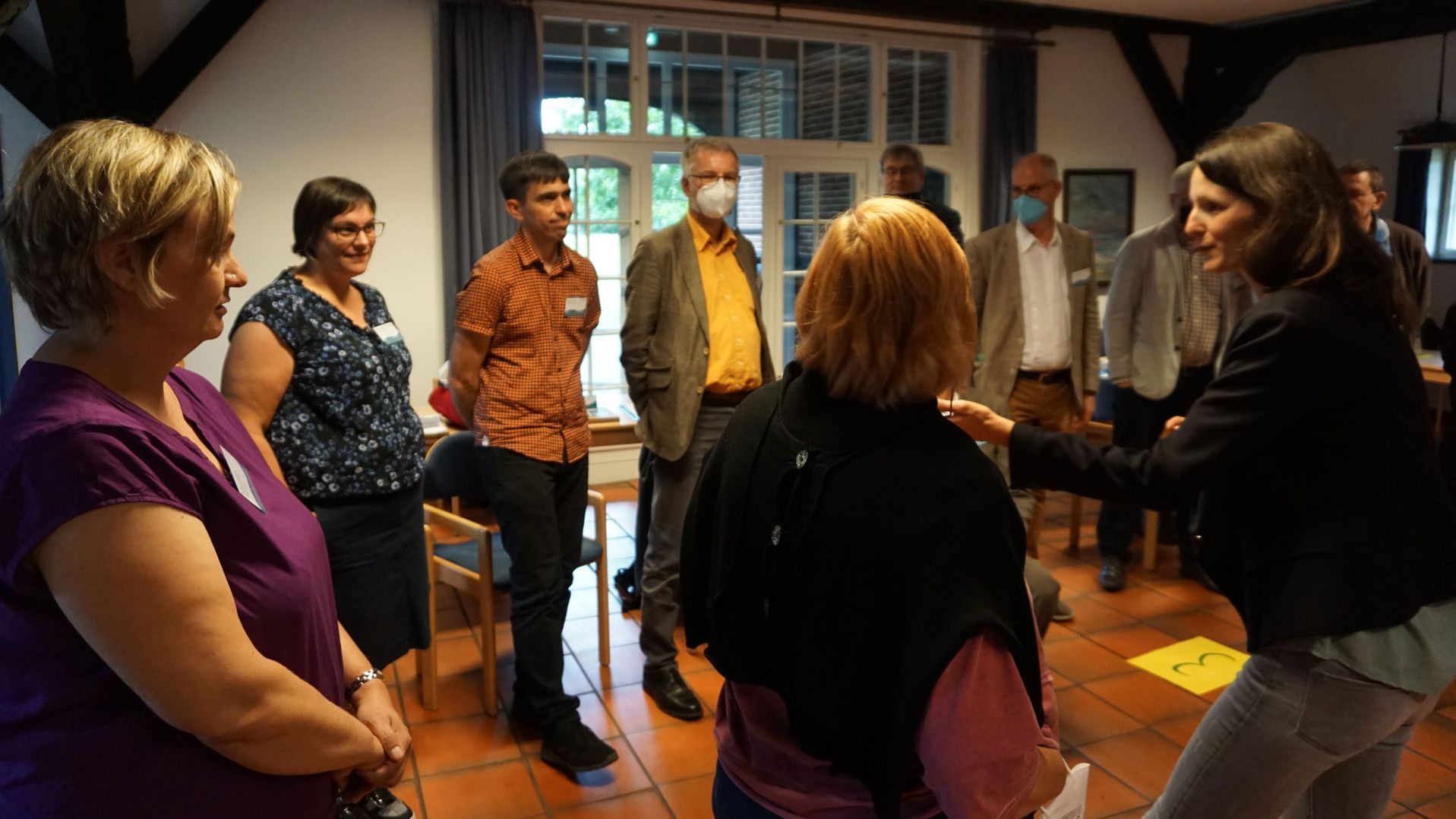
Meet & Greet as it's best!
All of this requires leadership within the church that is not only willing to lead, but also expects honest feedback, listens and looks, self-reflects, and allows for participation. Just leadership includes serving humbly, setting an example, and being predictable. With that comes a willingness to try new ways of doing things, while being willing to compromise and being grounded in ethics.
It was an evening of deep conversations in a trusting atmosphere, as the two PKK observers summed up their first evening together.
In the day's summary, Frauke Bürger (VEM) and Enno Strobel (UEPAL) note that meetings are difficult in times of Corona. "Many are missing, and are missed" Bürgers states with regret "but it is good that those who are there are all there. We are nevertheless very diverse and that promises good results."
She emphasizes that the desire for peace was palpable and experienced everywhere by all the interlocutors and was also articulated.
The basic tone is set and gives courage for the further talks.
Monday from the point of view of the external observers
In the daily review, Frauke Bürgers (VEM) and Enno Strobel (UEPAL) note that meetings are difficult in times of Corona.
"Many are missing and will be missed" Bürgers states with regret "but it's good that those who are there are all there. We are nevertheless very diverse and that promises good results."
She emphasizes that the desire for peace was felt and experienced everywhere by all the interlocutors and was also articulated. However, many participants found it alarming that the tendency points in the other direction: conflicts of all kinds are becoming sharper and more vehement.
Enno Strobel refers to some points that touched him on the first day:
"All the churches present here see themselves as both givers and takers, regardless of whether they are poor or rich churches. No church is so rich that it cannot accept. There has to be a change in thinking - 'at eye level' also means that rich churches can accept that poor churches can help them just as much as vice versa. And it also means that churches share both good news and bad news with each other, a bit like a marriage vow - in good times and bad." Strobel was pleased to hear that there will be concrete agreements at the PKK, not channeled through the ELM but agreements within the network, whether bilateral or multilateral. "Dialogue is a key word here. Dialogue is the tool of choice that leads to integration" said Strobel.
And there was already a very concrete idea on the first day that everyone was enthusiastic about. Rev Odair Braun, Vice-President of IECLB, told us that in his church in Brazil, a tree is planted for every baptism. True to Luther's motto: "Even if I knew that the world would fall to pieces tomorrow, I would still plant an apple tree", a sign of hope is set there to counteract climate change and deforestation. A simple but effective idea that inspires imitation. In the situation of baptism, even people who otherwise tend to ignore the topic of climate change can actively practice climate protection and go along with it, because generativity is always considered in baptism.
This is a step towards how suggestions and demands can be implemented on the way to a just church of the future and not just become a paper tiger.
