“Powerless, but not helpless” – peace needs people who are committed to it
Reverend Dr. Vera C. Pabst installed as Head of Department for Faith in Global Perspective
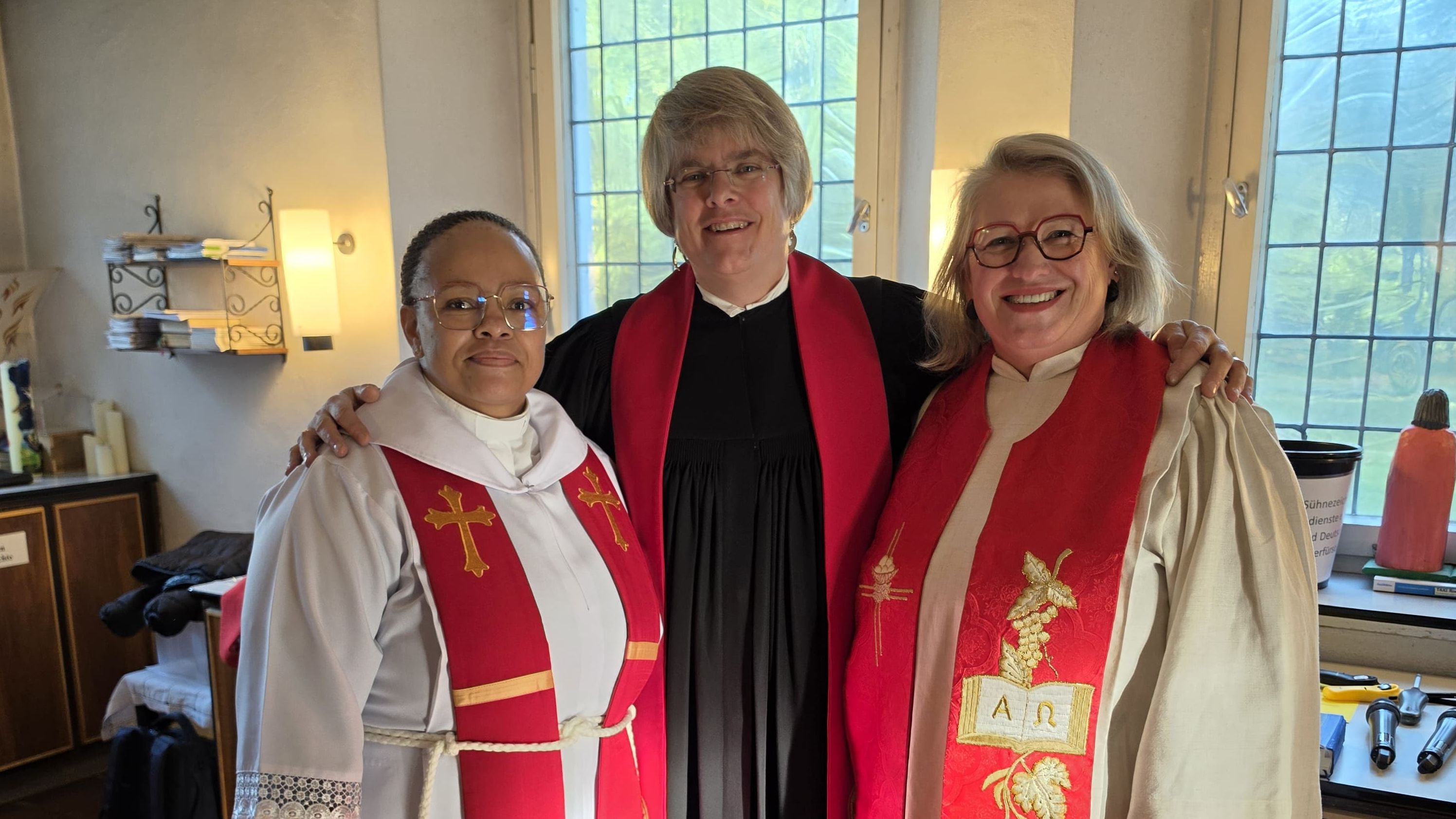
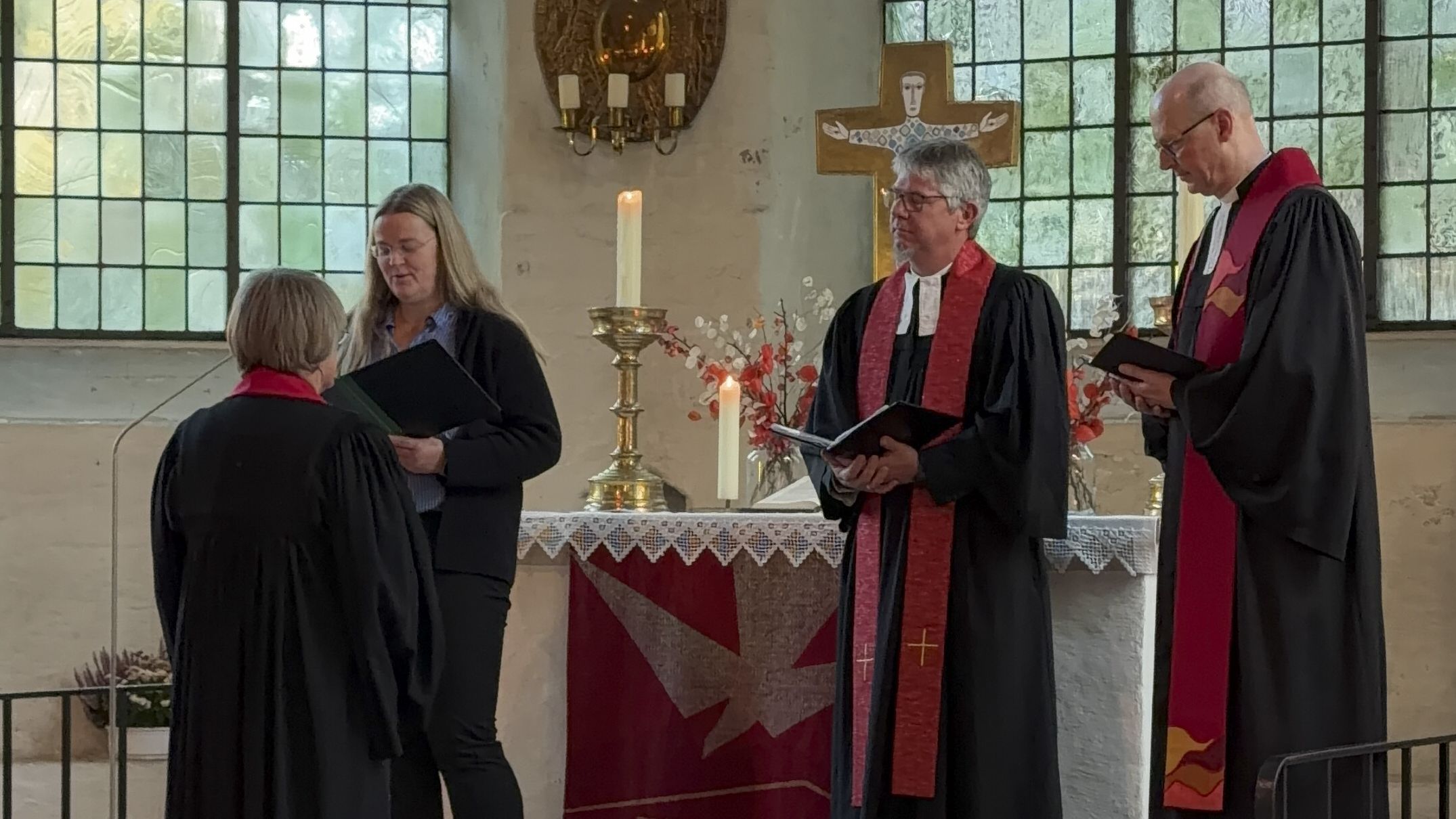
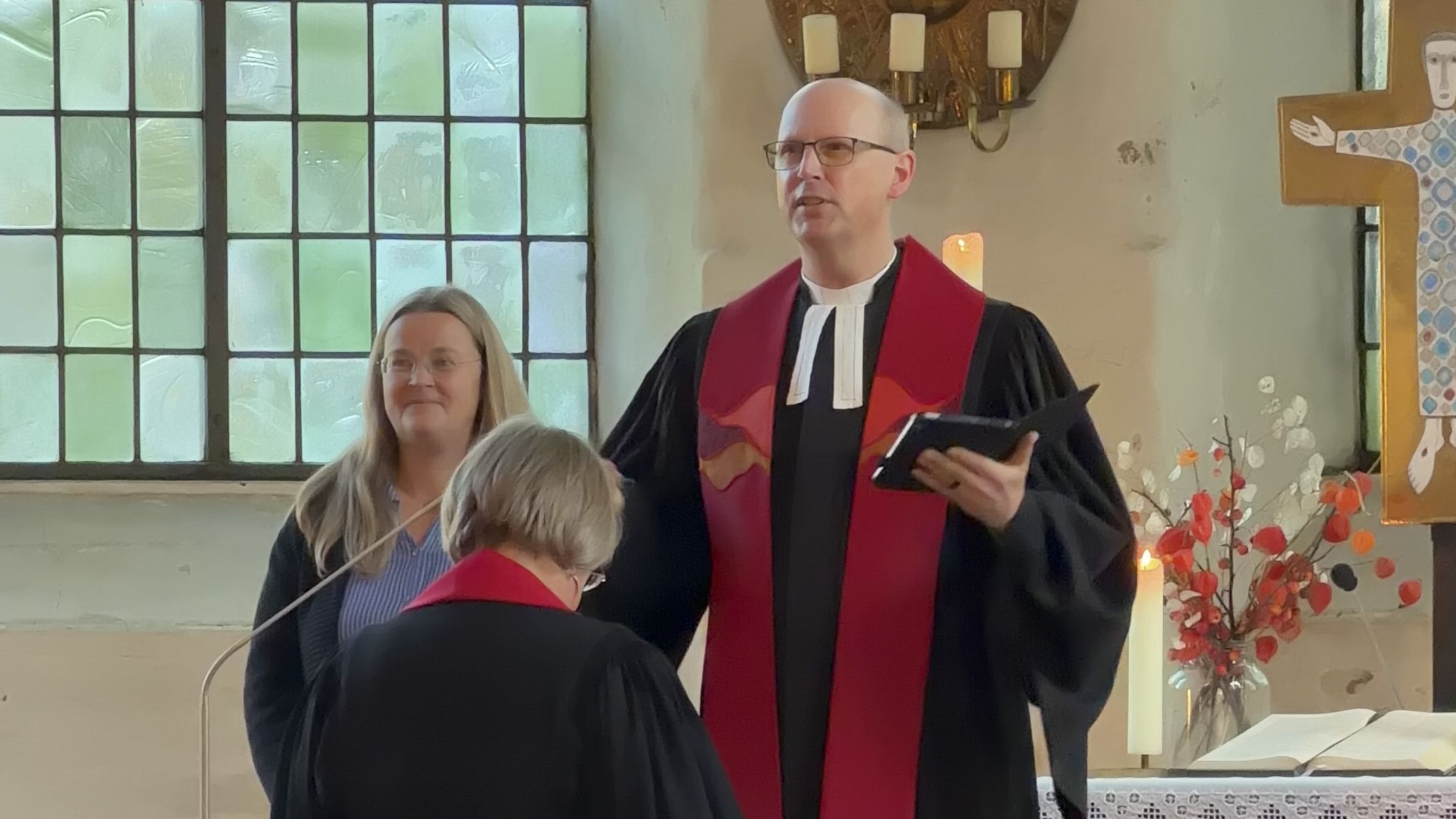
Under the motto “Seek peace and pursue it!” (Psalm 34:15), Reverend Dr. Vera Christina Pabst was installed on the Saturday before Remembrance Day at St. Peter and Paul’s Church in Hermannsburg as Head of Department for Faith in Global Perspective of the Evangelical Lutheran Mission in Lower Saxony (ELM). She had already taken up the post on June 1, 2026.
ELM Director Holger Siebert inducted Pabst into her post and, together with other participants, bestowed a blessing upon her. The service was also attended by guests from partner churches in South Africa and Namibia, including Bishops Gilbert Filter and Theo Jäckel from South Africa and Bishop Frank Schütte from Namibia, who, while in Germany for the EKD Synod, accepted the invitation to attend the installation. In addition, guests from a wide variety of Vera C. Pabst’s previous professional circles had travelled to Hermannsburg and took the opportunity to inquire about the work of the ELM and possible areas of cooperation.
Peace is more than the absence of war
The service centred on the question of how people can contribute to peace in the face of war, the climate crisis and social injustice. In her sermon on Psalm 34:15 and Romans 15:13, Pabst recalled the division of Germany and drew a parallel with the people fleeing the war in Ukraine today. Prayers and hymns for peace are therefore by no means outdated. In the ELM’s partner countries, too, violence, the effects of climate change and social conflicts are part of everyday life. Peace in the biblical sense, ‘shalom’, means more than the absence of war: it also includes social justice and a life lived in dignity. From her many years of experience in South Africa and encounters in other partner countries, she knows how peace, freedom and security should not be taken for granted.
At the same time, she encouraged the congregation not to underestimate their own capacity for action, despite major political challenges. Peace begins in the way we treat one another, in examining our own attitudes and in standing up for others. “Peace education therefore begins with the cultivation of the heart and conscience,” said Pabst. While people may often feel powerless when it comes to global political decisions, they are by no means helpless.
“Peace education therefore begins with the formation of the heart and conscience!”
The message of peace was also reflected in other elements of the service: the Beatitudes from the Sermon on the Mount were presented by Nadia El Karsheh and members of the partnership group. Dietrich Bonhoeffer’s confession of faith served as a reminder of our responsibility to stand up for what is good. The service featured musical contributions including singing by Mpho Hlongwa, a former ELM volunteer from South Africa, and Waldemar Rausch on the saxophone, as well as songs sung together, echoing the plea for courage, hope and peace.
Pabst studied theology in Hamburg and South Africa, obtained her doctorate in 2005 and was ordained as a pastor in 2006. Through various church roles, she gained experience in ecumenical cooperation and international exchange. Most recently, she was in charge of the lay readers’ and lay preachers' ministry in the Evangelical Lutheran Church of Hanover. She now hopes to contribute her international experience and networks to the work of the Department for Faith in Global Perspective, the ELM’s exchange programmes and the ongoing processes of change within the mission organisation. Looking beyond her own church walls has always been beneficial for her.
Overcoming barriers like an oryx antelope
At the reception that followed, there was a lively exchange between guests from a wide variety of backgrounds. Bishop Schütte illustrated how boundaries can also be overcome using the example of an oryx antelope that was standing on the road in front of him, seemingly trapped by fences with no way out, but which ultimately found a way through. An image of these animals now accompanies Dr. Pabst as she takes her next steps.
