“We are more alike than we think”
What a special day – the ELM at LaGa 2026.
Youth partnership with South Africa at the State Garden Show
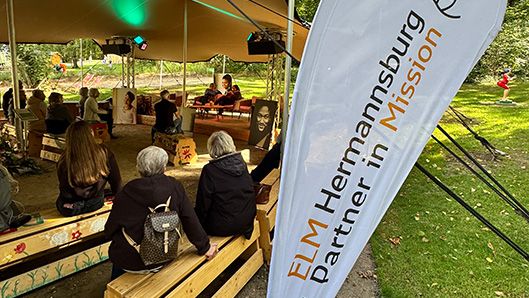
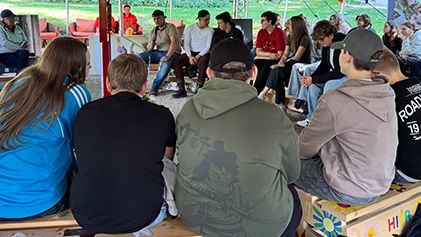
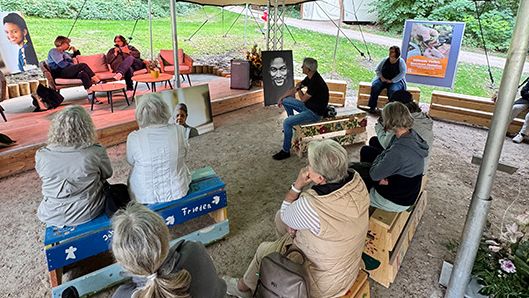
What connects young people from Lower Saxony and South Africa? This question was the focus of a round-table discussion organised by the Evangelical Lutheran Mission in Lower Saxony (ELM) at the 2026 State Garden Show in Bad Nenndorf. In the church pavilion of the Regional Church of Hanover, the focus was on the youth partnership between the Hoya-Pyrmont church district and the Kalahari church district in South Africa.
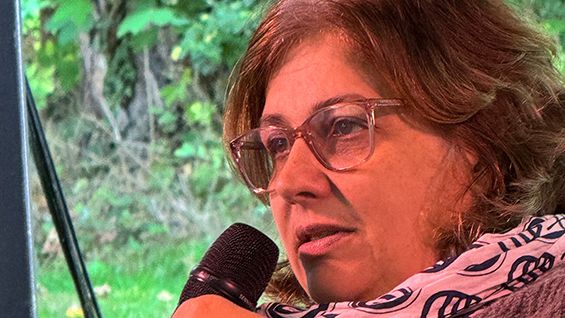
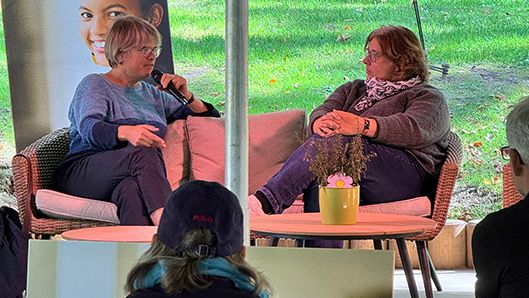
The guest speaker was Peggy Zawilla, a deacon specialising in youth work in Bad Münder. She has been involved with the partnership for more than 30 years. She travelled to South Africa for the first time at the age of 17. Today, she supports young people in their own exchanges. She was interviewed on the panel by Dr Vera Pabst, a pastor and the new head of the ELM’s Global Church Department.
Encounters rather than clichés
“The most important thing about meeting local people is that you learn they are just as human as you and I,” said Zawilla. The young people experience a different everyday life, a different society and a different church culture. At the same time, they discover things they have in common: family, friendships, faith and the question of what sustains people in life and makes them happy.
Preparation for a trip therefore begins long before departure. For a whole year, the young people engage with the history and present-day reality of South Africa, apartheid and its consequences, as well as the living conditions and culture of their partners. “You have to prepare people for this,” emphasised Zawilla. Personal encounters help to challenge simplistic notions about a country and its people.
Friendships that last
The relationships that develop during these encounters are particularly important. The young people stay in touch via WhatsApp and video calls even between trips. In this way, friendships grow over the years. Following last year’s visit by the South African young people, the German group is already planning its next trip to South Africa.
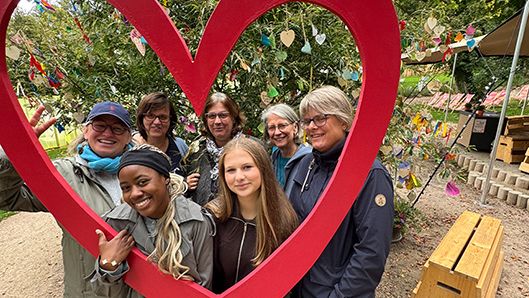
The fact that such a partnership can have an impact far beyond a single trip is also demonstrated by today’s team members. Some of them took part themselves as confirmands and are now passing on their experiences to the next generation.
“Without a mask”
The portraits that Zawilla brought along to the interview show just how lasting these encounters can be. German and South African young people had worked with a photographer to create images of themselves. Their task: to find a photo that showed their own personality – “without a mask”. Later on, it proved almost impossible to match the accompanying texts unambiguously to the pictures.
For Zawilla, this revealed just how similar people are despite differences in skin colour, living conditions and economic circumstances. Churches, too, can learn from one another. She experiences the South African congregations as places of great mutual support and a spirituality that is lived out as a matter of course.
Encounters such as these will therefore continue to require personal closeness in the future:
“It’s something completely different when I set off with you and we experience an adventure together.”
The event in the church pavilion showed how personal relationships can develop from a church partnership – and how young people can become bridge-builders between continents and cultures in the process.
