"... so that they may all be one, Father"
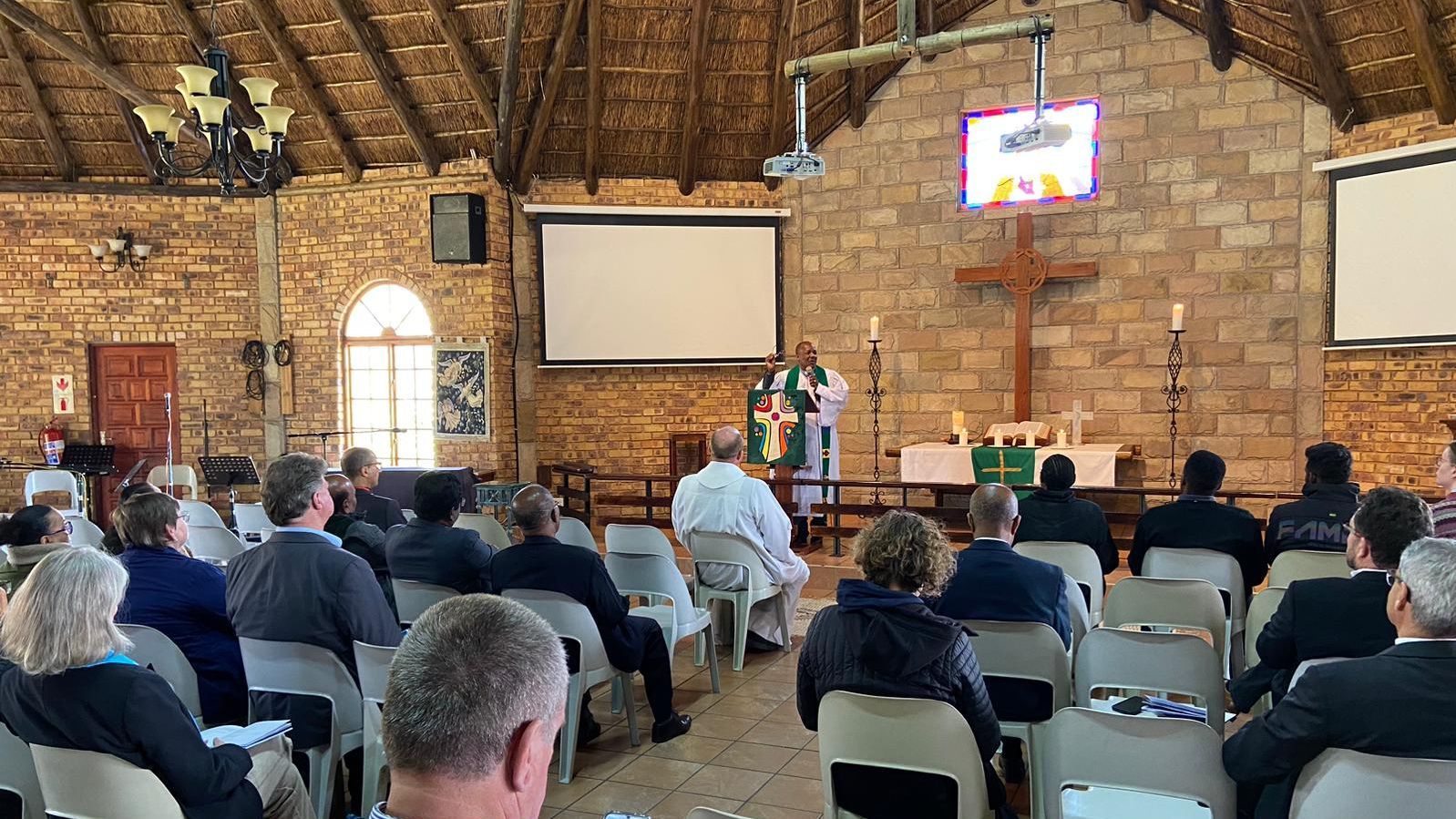
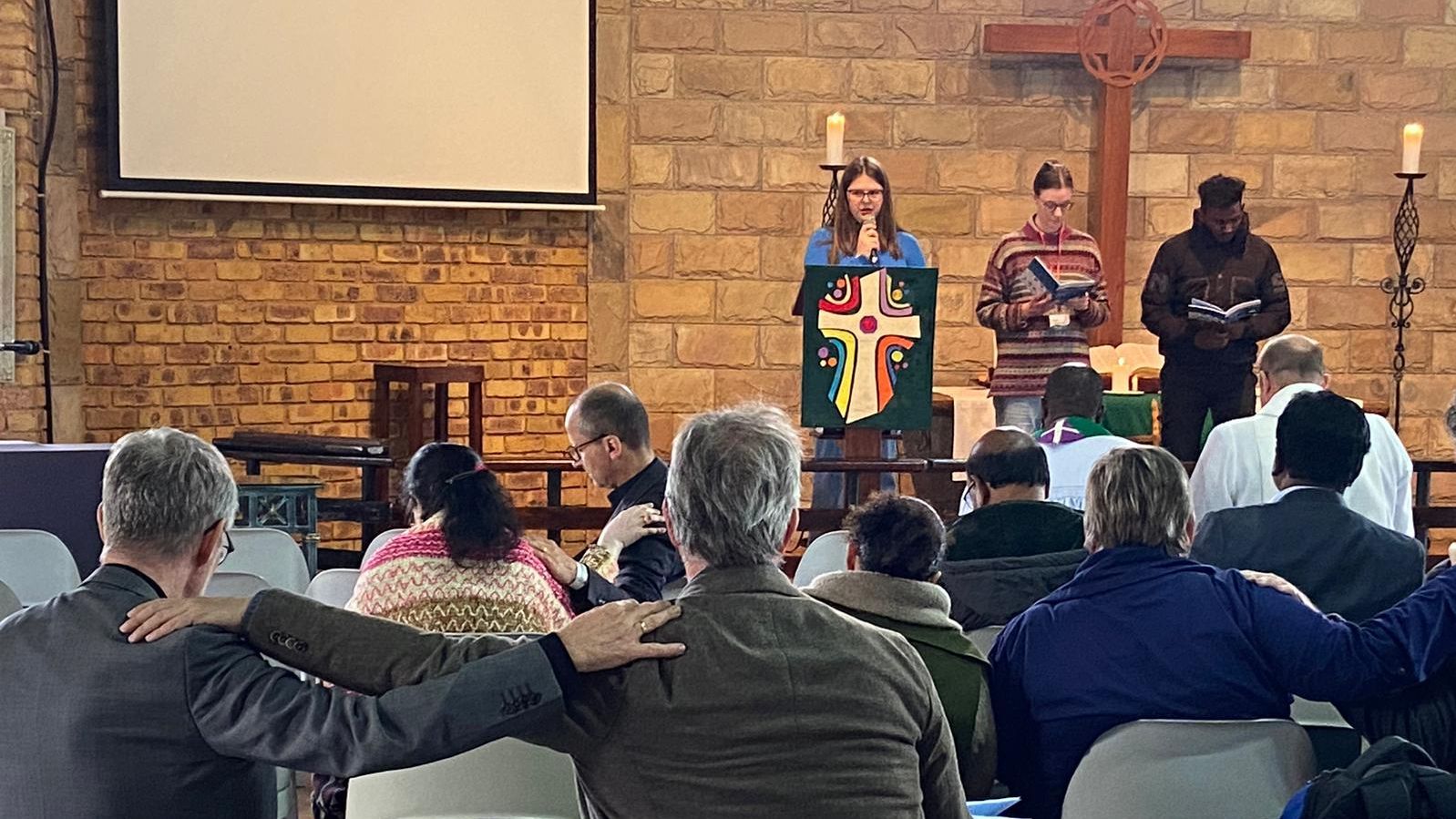
Sermon by Dr Emmanuel Kileo, Director of the ELM, at the opening service of the Partnerchurch Consultation 2024
"... so that they may all be one, Father, just as you are in me and I am in you. So they also shall be in us, that the world may believe that you have sent me." (John 17:21)
The grace of our Lord Jesus Christ, the love of God the Father and the fellowship of the Holy Spirit be with you all! Amen!
Dear brothers and sisters in Christ, dear participants in our Partnerchurch Consultation,
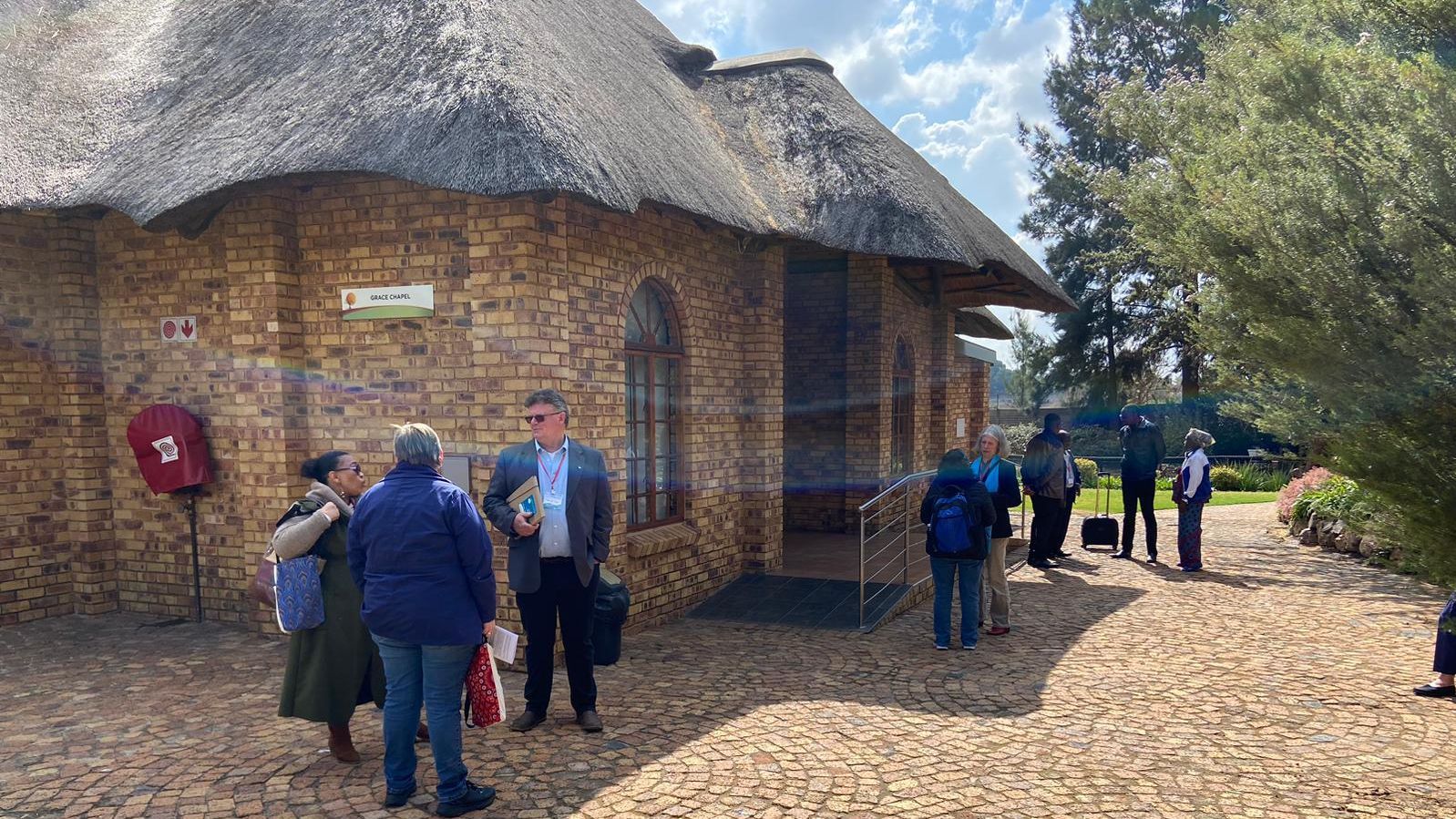
Our journey to distant South Africa is motivated by our thirst for unity, the search for communion, for oneness, for being together in order to experience this communion again - to celebrate oneness. We are in search of a renewed connection with all, from all four global directions. We are used to talking about global North and South and later South and North, but we are privileged in our context, it is also about East and West. The feeling is very clear: we need each other - all of us.
As human beings, we simply need each other. We are "zoon politikon", as Aristotle explained years before Christ, i.e. we are "human beings as social and political creatures".
● As Christians - who share the same baptism, the same faith and the same values - we need each other.
● Since the ELM partners have a common history, we feel the need to come together every two years - we can even imagine every year.
We are together as one church. Individual churches make one church! It is interesting to note that individual churches, long defined by the three principles of self - self-governance, self-sufficiency and self-propagation - are now being called to be one church again. This is the theme of our consultation this year. How will this work? We will revisit, restore and renew our commitment to working together. We remember that in John 17, Jesus desired and ultimately prayed for the unity of the church to be formed.
● He prayed for himself: "Father, the hour is near, glorify your Son."
● He prayed for his disciples: "Sanctify them in the truth; your word is truth."
● And finally, he prays for the church: "Not for them alone, but also for those who will believe in me through their word, that they may all be one."
John 17:21 clearly shows the desire and need for unity: "...that they may all be one, Father, just as you are in me and I am in you. So may they also be in us, that the world may believe that you have sent me." - It is emphasised that people will believe that we are one church and that God has sent us if we stay together, if we work together. We have a common mission when we work closely together and are united. In Tanzania we say "Umoja ni Nguvu", which means "unity is strength - strength" and isolation/division is weakness or defeat. The Partner Church Consultation - PCC - is a living symbol that our individual churches are one "church". We want to connect our networks, the network of Christians who help and love each other. Nothing unites people more than working towards a common goal. When we meet, we encourage each other and share our experiences of how we can be and remain one church. As you may know, the church is facing so many challenges. In Europe, not everyone is automatically convinced that the church is a useful institution - they say:
● "Jesus yes, but the church no!" It's faith without belonging to a particular church.
● They even know the saying: "God yes, the church also yes, but its representatives on earth, please no".
● Theologians know the saying of the French Catholic priest and professor Alfred Loisy: "Jesus preached the Kingdom of God, what has come is unfortunately the Church."
● Not only in the West, in South Africa the late Bishop Desmond Tutu blatantly wrote: "God is not a Christian." We cannot deal with all these challenges alone.
● At the same time, smaller challenges such as discrimination and false teachings, so-called misleading theologies, are creeping into our churches.
How diverse are our churches? It is interesting to note the inclusive nature of Jesus in his movement - throughout his three-year mission with his disciples. As Jesus led his disciples, he did not exclude those who were a little uncomfortable - who did not always listen to him, who did not adhere to norms or ethical codes, who did not agree with common theological understanding, etc. For Jesus, everyone's space was more important than theological understanding - "being together is as central as our theological differences." Our unity is more important than our dogma. We remember: Some of the disciples were:
● snooty like Peter - naturally more know-it-all than others - a straw man who pretended to love Jesus more than others, who even wanted to die for him, naturally also a traitor or
● greedy for money like Judas,
● Doubters like the "doubting Thomas".
● Silent ones like Jacob
Jesus spoke and had fellowship with those who were caught in adultery, or even conversed with those who had many husbands, like the Samaritan woman, etc. He even promised to build the church on the betrayer - Peter - saying, And I say to you, You are Peter, and on this rock I will build my church, and the gates of Hades will not prevail against it (Math. 16:18). As wisdom to his disciples, Jesus says in Matthew 13:30: "Let both grow together until the harvest, and at harvest time I will say to the reapers: Gather the tares first and bind them in bundles..."
Diversity was very clear to Jesus, otherwise it would be very boring in our churches. Do all people think like me or you? We are invited to "bring a diversity of voices to the table". The kingdom of God is colourful, with many colours - the rainbow people of God! All are invited and welcome.
Unity, as Jesus asks for his church, means that we come together with all our differences and idiosyncrasies. Recently I learnt that the old and most famous theologian of the West, Karl Barth, had two wives and they all lived together - not necessarily in peaceful coexistence, as we read in his recently published biography. I don't mean that this was okay, it just bothers me, just as it bothers you. He also understood diversity, they say. Now we can better understand his famous quote: Asked by a widow after the service: 'Tell me, Professor! Will we see all our loved ones again in heaven?" And he replies: "Yes, but also the others!" - His two wives? ... - Probably even the ones we don't love - because they don't live like us. Isn't that the same thing Luther said: "I expect three surprises when I get to heaven?"
● Firstly, there will be people in heaven that he didn't expect to be there.
● Second, there will be people who are not in heaven that he was sure would be there.
● Thirdly, the biggest surprise is that he himself is there!
The famous poet and civil rights activist Audre Lorde once said: "It is not our differences that divide us. It is our inability to recognise, accept and celebrate those differences". As a church we are called to accept that there are differences within our churches, we are called to recognise them - to give them the identification number they deserve, but not to allow them to define us, no - we are called to celebrate those differences - they are there for a purpose - to enrich the body of Christ - the church.
● In a world that is so divided, especially when it comes to the issue of justice, peace and creation, we need each other, we need a common voice as church, and the world will understand that Jesus sent us, and that confirms to us: we are church - that is the mission - "well lived and practised."
● In a world that is so torn apart, especially when it comes to hopelessness, helplessness, lack of perspective and greater despair, especially in the global North and West, we need each other again, we need a common voice as a church, and the world will understand that Jesus has sent us, we are the church - that is the mission - "well lived and practised."
Called to be church - we reconnect, store and renew our energy, enthusiasm and commitment to serve together. ... so that the world may believe that you, God, have sent us.
As we begin our consultation here in beautiful South Africa, may the peace of God, which surpasses our understanding, keep our hearts and minds in Christ Jesus.
Amen!
