
"My questions have become more profound"
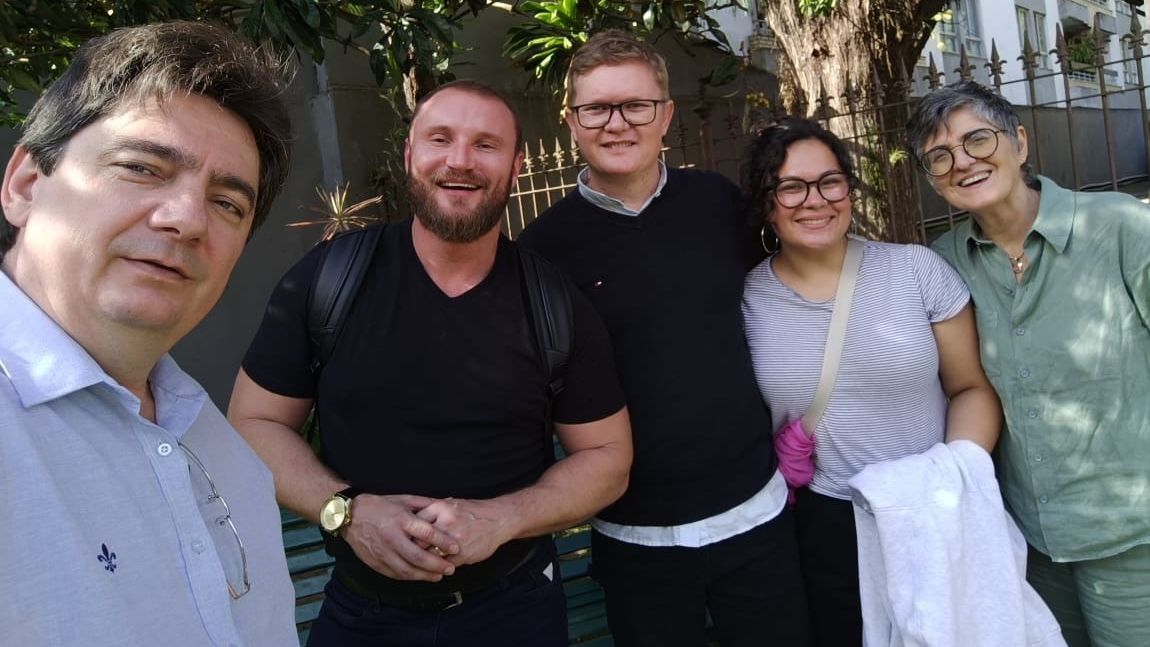
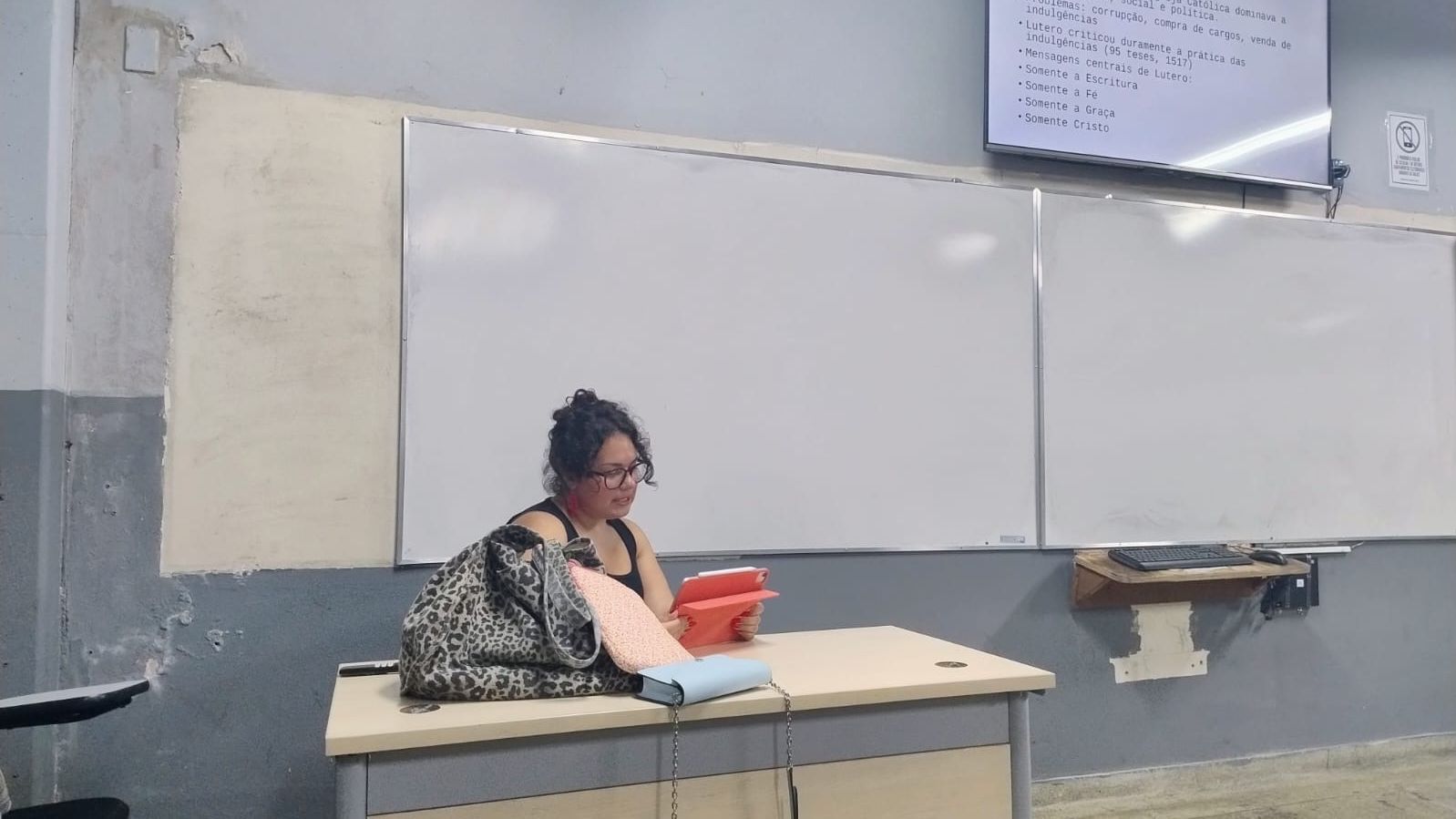
For six weeks, Zara Kiliç, a German theology student, undertook a placement in an Evangelical Lutheran parish in Rio de Janeiro, Brazil. This was made possible by a programme run by the Evangelical Lutheran Mission in Lower Saxony (ELM), which provides students within the area of the Evangelical Lutheran Regional Church of Hanover with insights into Lutheran congregations in the Global South and organises the preparatory and follow-up stages of their stay. The ELM’s Partnership Department is responsible for this; in addition, Zara Kiliç was in close contact with Cristina Scherer, the ELM’s ecumenical officer from Brazil, who has been working in Germany for several years.
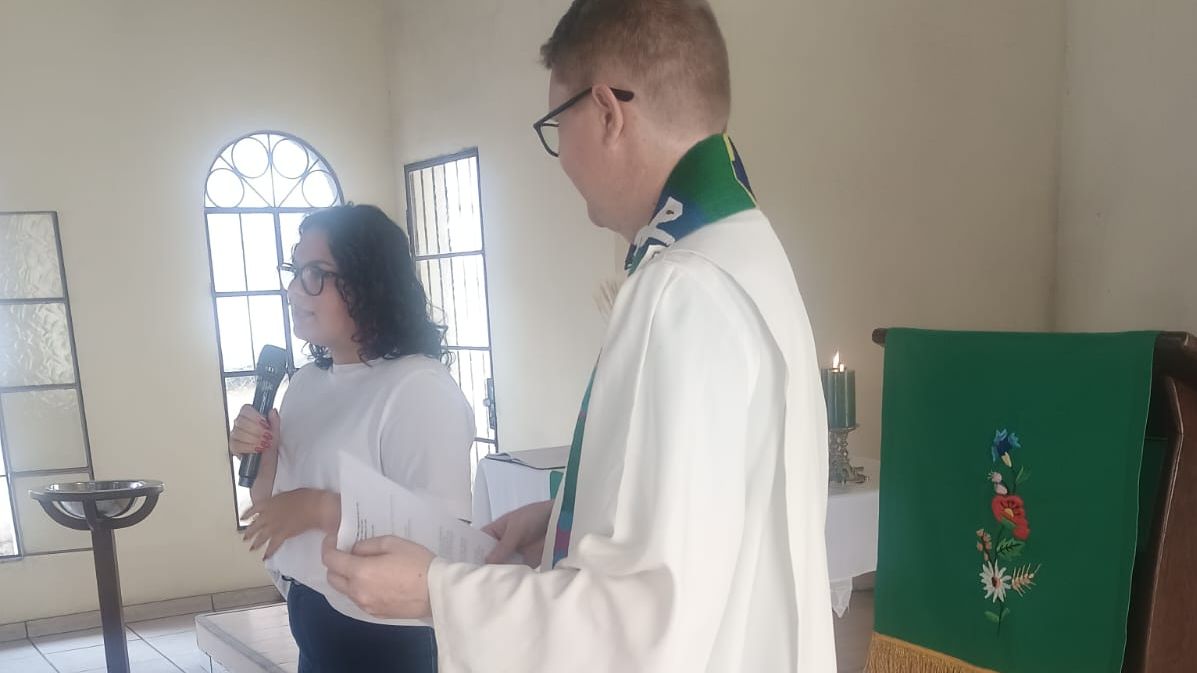
In the congregation in Rio de Janeiro, it was above all the personal encounters that left a lasting impression on Zara Kiliç. First and foremost, she mentions her mentor, Pastor Éder Beling. “I was able to reflect on all my experiences with him. That was incredibly valuable and helpful,” she recalls.
As she accompanied the pastor in his work, it became increasingly clear to her “just how privileged salaried pastors in Germany are”. Without a wealthy umbrella organisation, the very existence of the congregation and the pastor depends largely on the contributions of the parishioners. However, it is not just a matter of finances, but also of a multitude of tasks that the pastor in this Brazilian congregation has to manage almost as a sideline. From the perspective of the visitor from Germany, Beling was also a sexton, a technician, a gardener, a driver, an artist and a caretaker. Her conclusion: “Alongside all the questions I have about the Church as an institution, here – also with a view to my own future – I was able to see and appreciate much more clearly this ‘protective’ quality of the Church as an employer in Germany.” Perhaps, says Kiliç, there could be a sort of middle ground between a church and congregation organised along structural lines and one organised ‘from the bottom up’.
She also brought back from Brazil a new perspective on the global Evangelical Lutheran Church: “Whilst there, I realised just how taken for granted and, at the same time, unreflective my own understanding of ‘being Evangelical Lutheran’ is, even though I’d already given it some thought beforehand,” says the young woman, looking back. Whilst a relatively large proportion of the population in her home country is Protestant, it became very clear to her in Brazil that the Lutheran Church is a minority church worldwide.
Further fundamental questions arose during her stay: How does the Evangelical Lutheran Church actually deal with its heritage, which is so firmly rooted in a white, Central European context? And what does it actually mean to live out this heritage in parts of the world where faith, culture and social reality are intertwined in entirely different ways?
These are all questions to which Zara Kiliç still cannot find clear answers. “But they have gained depth through the concrete experiences I had there,” she is convinced.
