Diversity rather than division: encounter is a political force
Under the theme ‘Diversity rather than division: the political power of interfaith encounters’, representatives from six religious communities gathered for the tenth time on 30 October at St Martini’s Church in Stadthagen. The focus was on dialogue, mutual understanding and a shared responsibility for peace and social cohesion.
In his welcoming address, Dr Oliver Schuegraf, Bishop of the Evangelical Lutheran Regional Church of Schaumburg-Lippe, emphasised the importance of listening and open dialogue. Encounter, he explained, means recognising people and engaging with them even when their experiences, beliefs and ways of life differ from one’s own. Schuegraf made it clear that religious communities convey values such as love for one’s neighbour, compassion and responsibility. They create places of community and mutual support – and thus make an important contribution to society as a whole.
“Where religious communities engage in dialogue with one another, prejudices can be broken down, trust can be built up and, in this way, the cohesion of an entire society can be strengthened,” said Schuegraf.
The ELM was also a guest
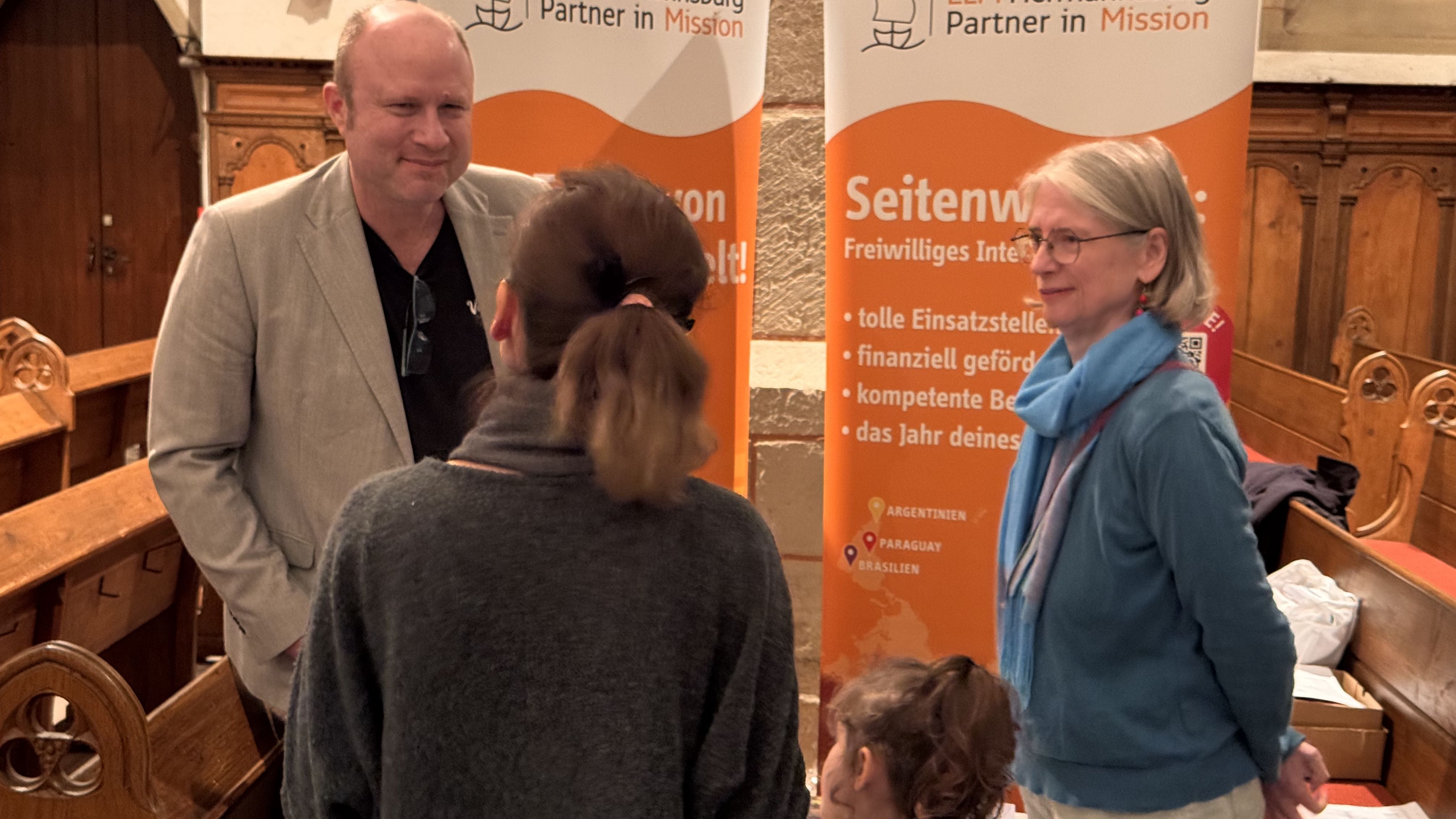
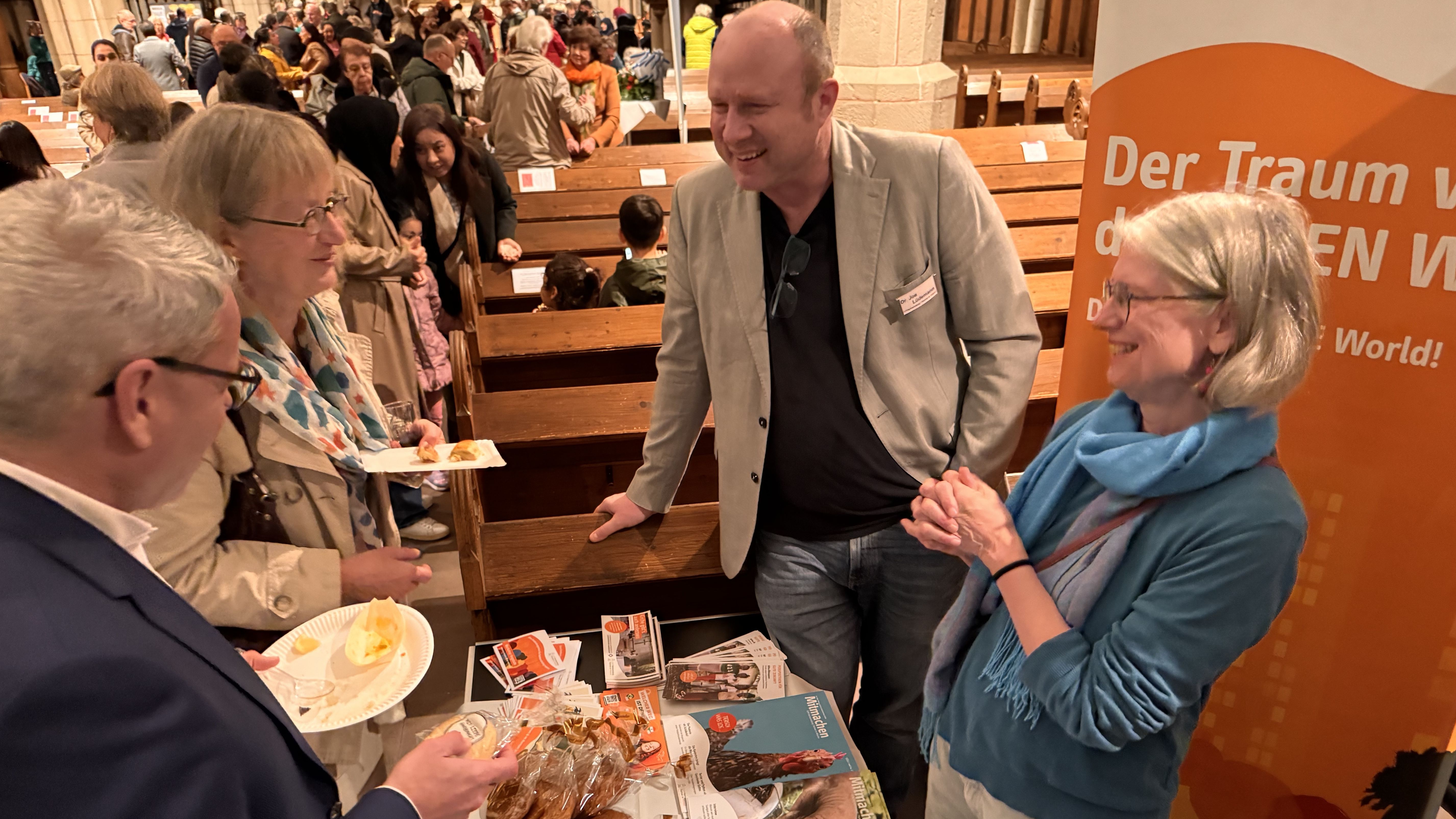
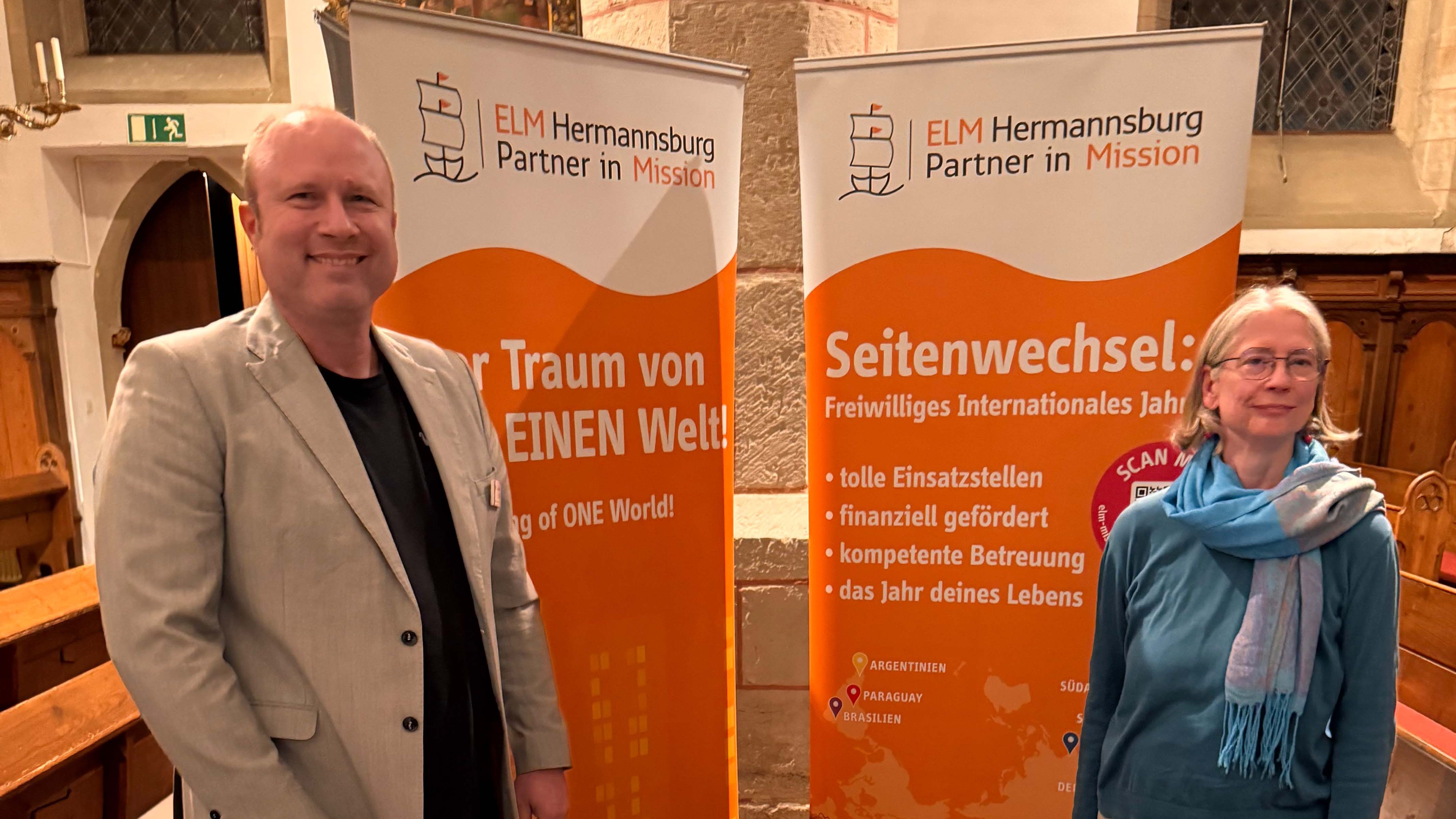
The Evangelical Lutheran Mission in Lower Saxony (ELM) took part in this special evening of dialogue at the invitation of the Regional Church, which is one of the three Lower Saxony churches supporting the ELM. It presented its work and its “dream of one world”: the vision of a world in which people connect with one another across borders, learn from one another and work together towards a fairer and more peaceful future. This idea tied in directly with the evening’s theme. For a world in which diversity does not divide but unites is created where people meet one another and are prepared to look beyond their own boundaries. This is precisely what many of the evening’s guests did whilst chatting at the mission organisation’s stand.
Cohesion arises through joint action
In his address, District Administrator Jörg Farr looked back on the development of interfaith encounters in the Schaumburg district. What began with initial contacts, mutual invitations and personal conversations has, over the years, become a well-established tradition. This development demonstrates how important it is to build trust and continuously nurture relationships.
Farr reminded the audience that major societal challenges can only be overcome by working together. The COVID-19 pandemic, just like crises caused by natural disasters, prolonged power cuts or cyber-attacks on critical infrastructure, has made it clear just how much people and different sectors of society depend on one another. Whether in healthcare, the economy or social life: cohesion and trust are indispensable.
Farr summed up his key message with a clear statement: “If we consciously recognise and shape diversity within our communities, this becomes a positive political force for our society. Then trust grows, and so does security.”
Dialogue also means addressing differences openly
According to Farr, successful dialogue does not mean concealing or ignoring existing differences. Rather, it is crucial to address these openly, explain the respective positions and treat one another with respect. Only in this way can understanding and trust develop. An important foundation for this is shared values such as peace, justice and care, on which people of different religious affiliations can agree.
At the same time, Farr urged that interfaith encounters should not be limited to a single annual event. Rather, religious communities should visit one another in everyday life, nurture existing contacts and continue their dialogue on an ongoing basis. After all, lasting coexistence does not arise from isolated encounters, but from regular personal contact. In this way, religious diversity can become a vibrant and positive force for social cohesion.
Wishes for peace and encounters that bring people together
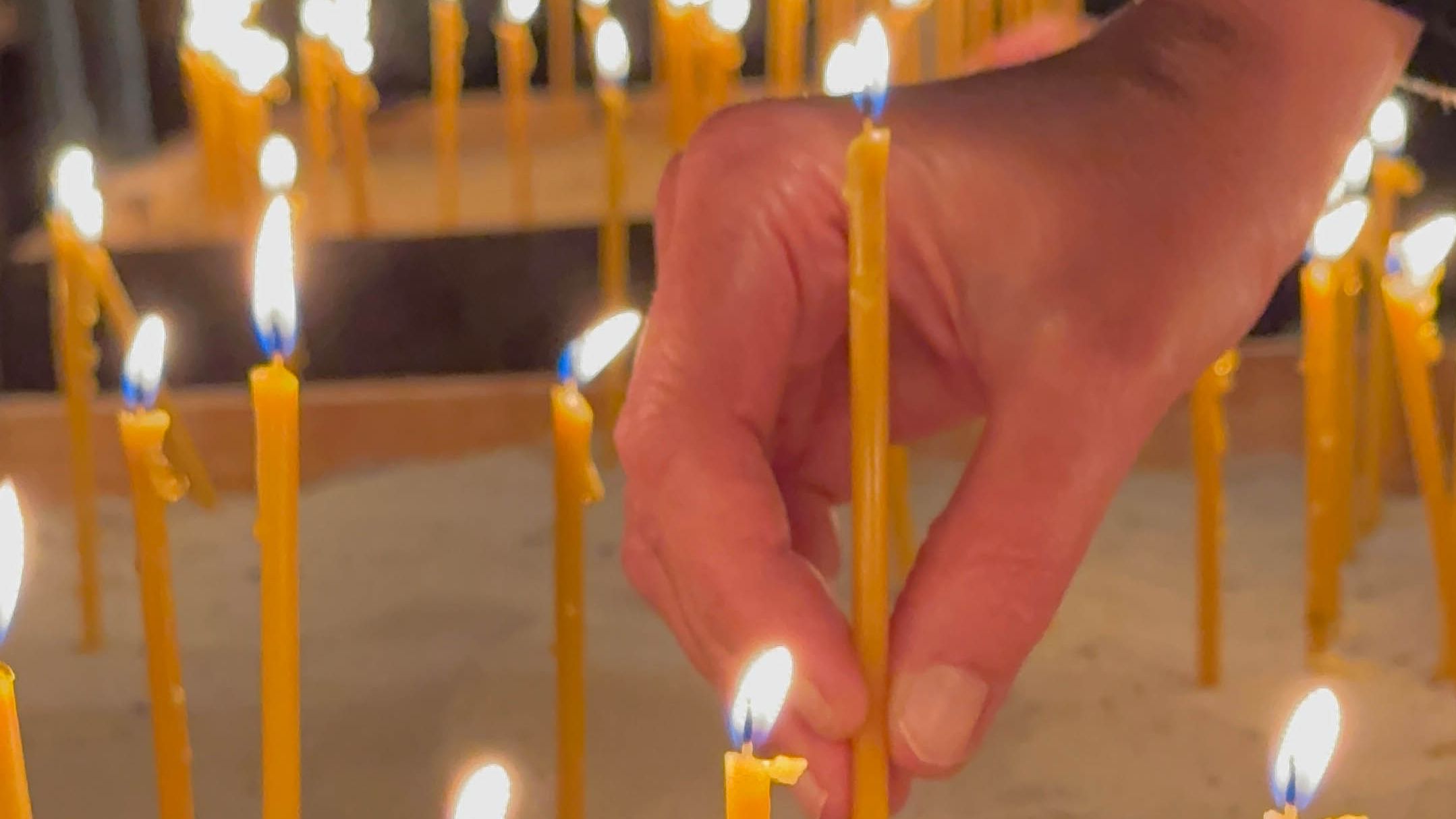
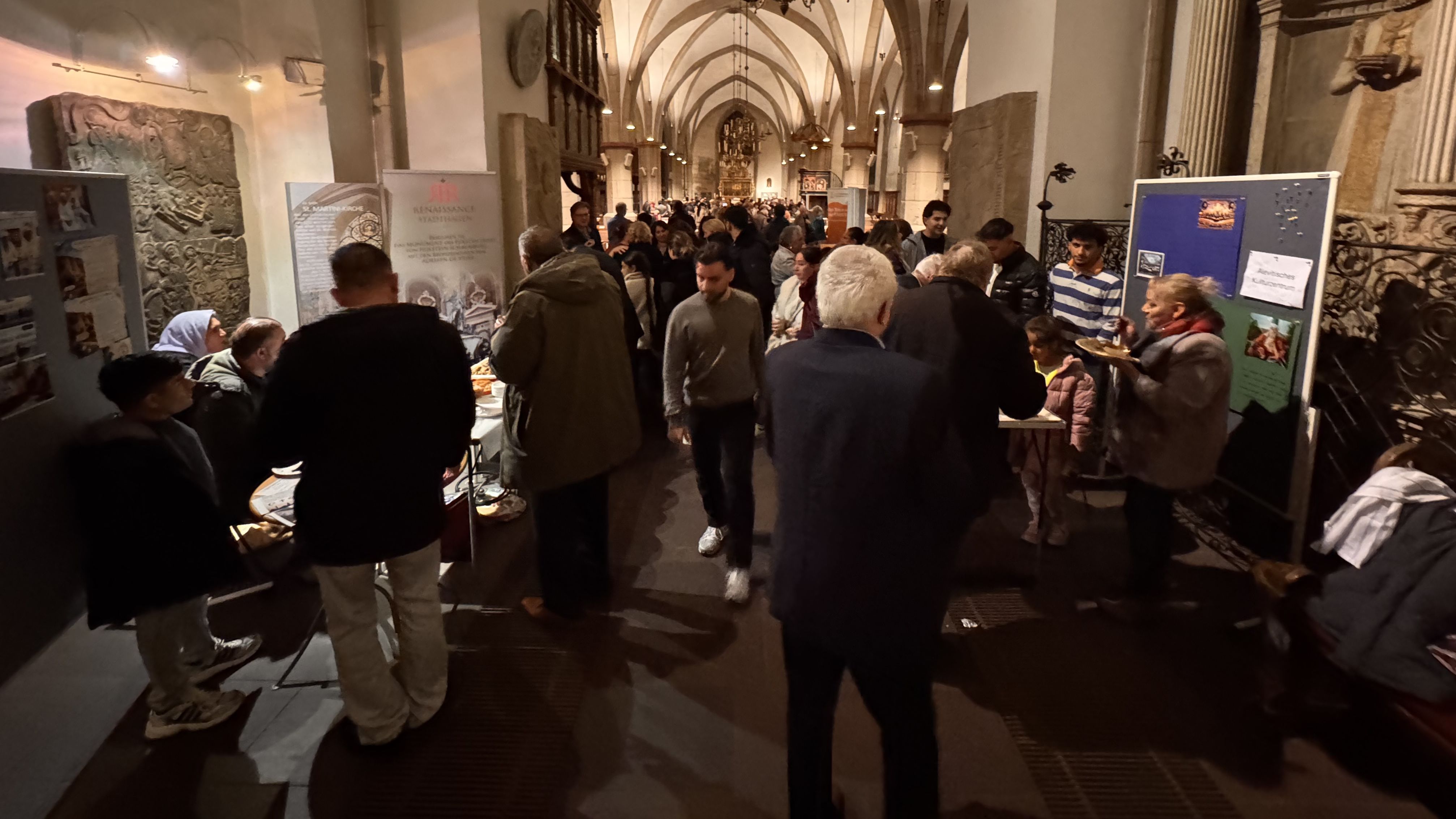
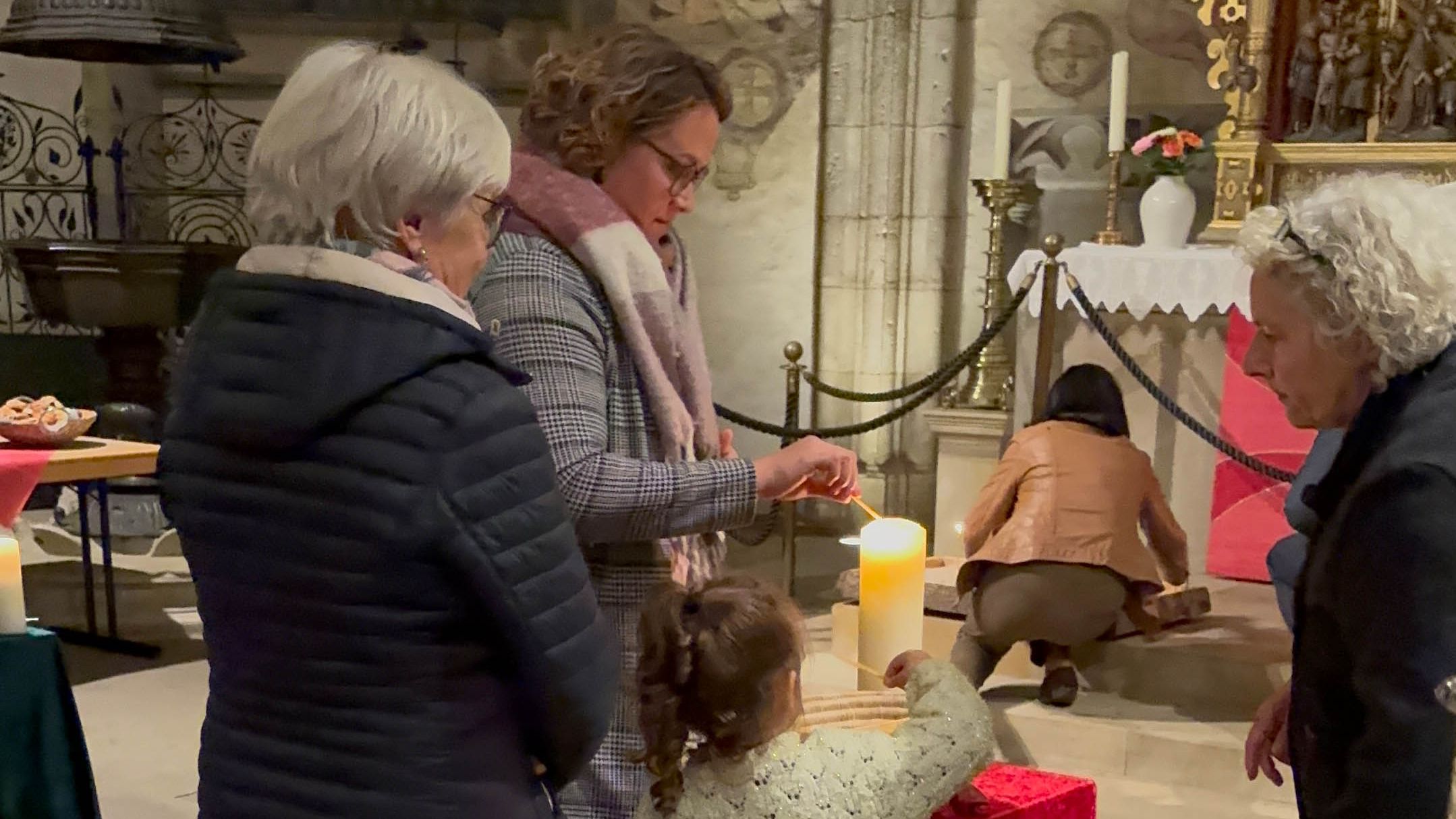
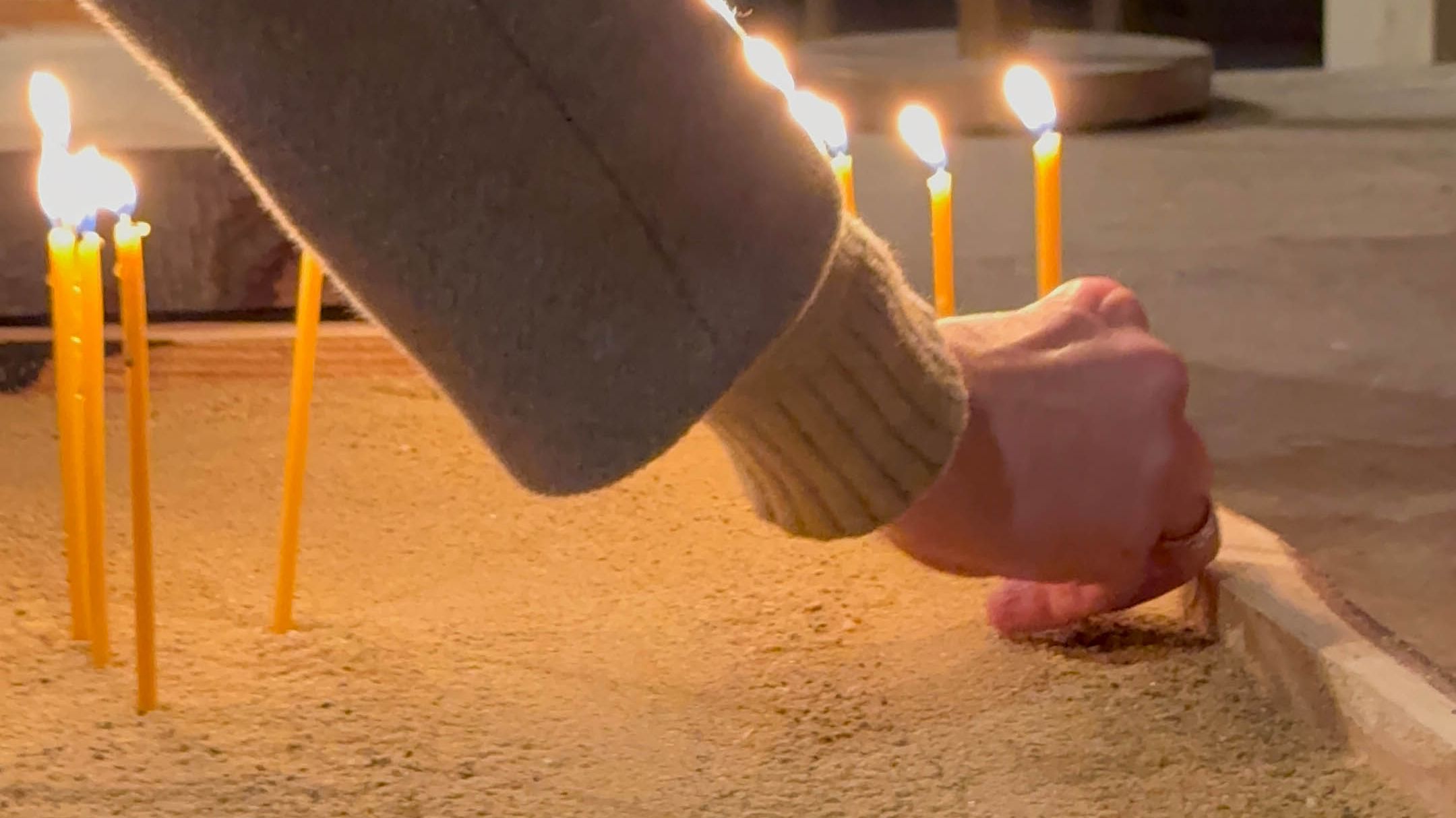
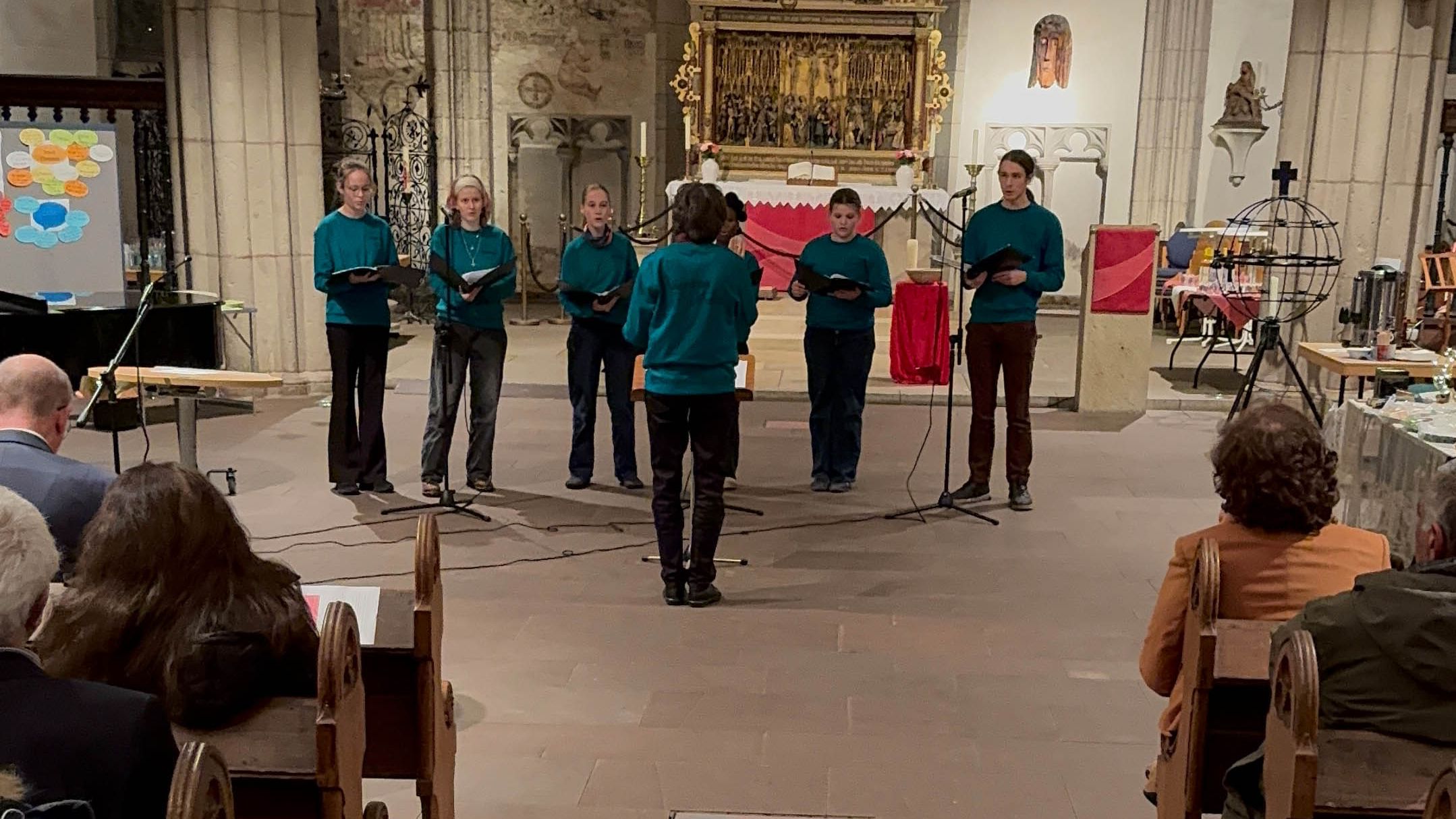
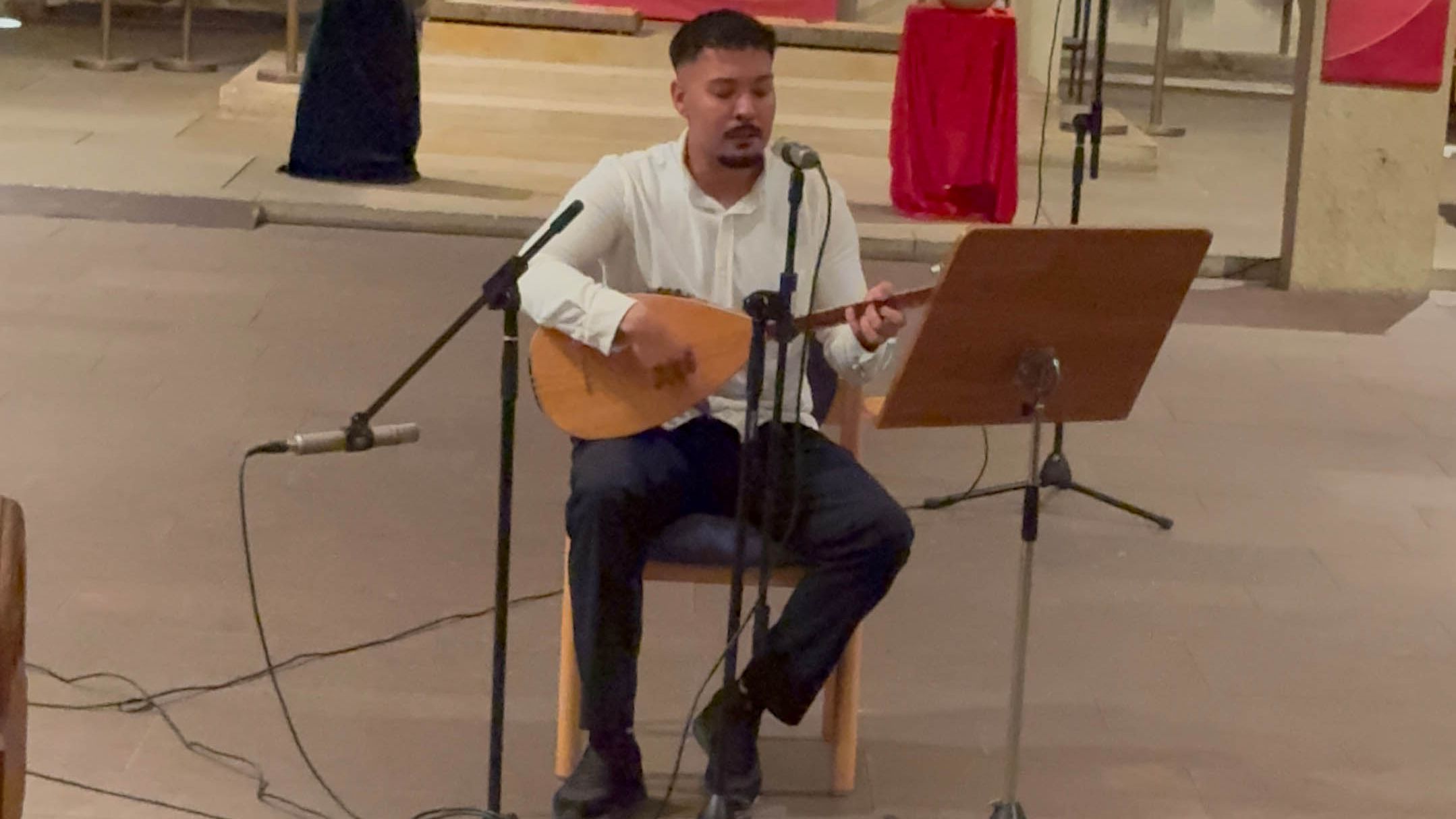
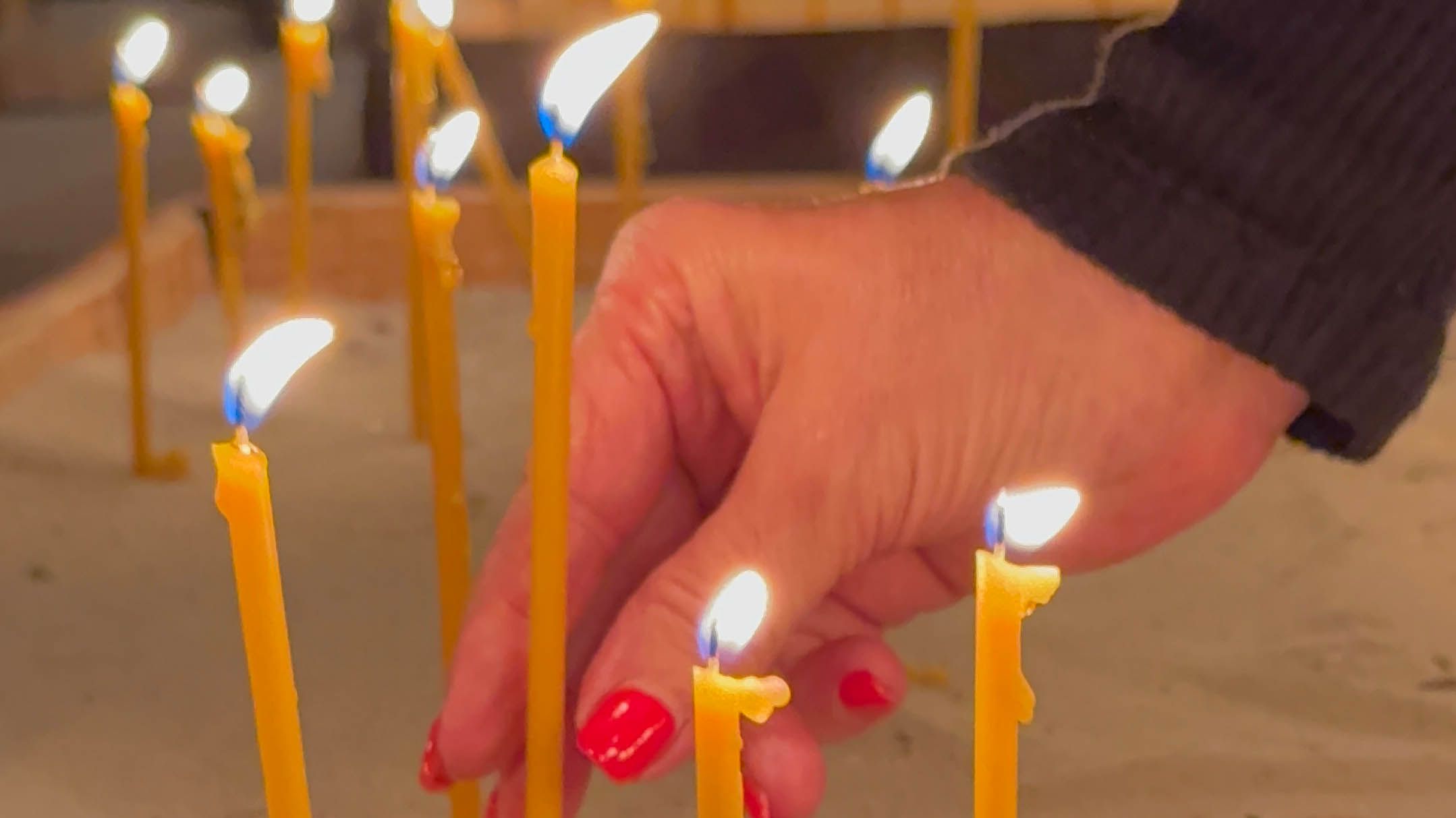
The evening’s musical programme was provided by the St Martini Youth Choir and Armağan Can Kaplan on the bağlama. A special moment was the joint prayer for peace: representatives of various religions shared their wishes for peace. Following this, the interfaith community was invited to light peace candles. Stella Perevalova accompanied this part on the piano, providing an atmospheric backdrop to the lively exchanges taking place at the numerous discussion stations throughout the spacious interior of St Martini’s Church. During the communal meal, not only were culinary specialities shared, but relationships were deepened and new connections forged.
The evening made it clear that cohesion does not require everyone to think or believe the same way. It grows through openness, listening to one another and a willingness to question one’s own perspective. Such encounters are particularly important at a time when exclusion and prejudice are on the rise.
Diversity is not a threat, but an opportunity. Interfaith dialogue shows that, despite differing beliefs, people can take joint responsibility – for peace, democracy and a fairer world.

